
Most people don’t go looking for a new online form builder because they’re bored with the old one.
They go looking because a contact form stopped capturing enough detail, a Google Form stopped matching the brand, or a free plan hit its cap in the middle of a launch.
That’s the lens this guide uses. Rather than ranking tools by feature count, it breaks down what each one is actually good at, where it falls short, and who it fits.
ProProfs Survey Maker leads the list for teams running recurring surveys and NPS at scale, but it’s one of ten worth knowing well.
What Is an Online Form Builder?
An online form builder, sometimes called an online form creator, is a tool that lets you design, publish, and manage web forms without writing code. You build the form in a visual editor, share it by link or embed, and collect responses in a central dashboard.
The category covers more ground than it used to.
The same builder now often handles lead capture, event registration, payment collection, and recurring feedback surveys, not just a static contact form.
10 Best Online Form Builders Compared on Price and Rating
Line them up on cost and rating first. The reasoning behind each score comes right after the table.
| Tool | Best For | Capterra Rating | Starting Price |
| ProProfs Survey Maker | AI-powered surveys, NPS, scored forms | 4.8/5 | Free plan, $19.99/month |
| Google Forms | Free, no-setup forms | 4.7/5 | Free |
| Typeform | Conversational feedback forms | 4.7/5 | Free plan, $29/month |
| Jotform | Payment and registration forms | 4.7/5 | Free plan, $39/month |
| Microsoft Forms | Internal surveys in Microsoft 365 | 4.6/5 | From $6/user/month |
| Paperform | Design-forward lead capture | 4.8/5 | $24/month |
| Formstack | Compliance-heavy workflows | 4.0/5 | $83/month |
| WPForms | Mobile-responsive WordPress forms | 4.3/5 | $49.50/year |
| Gravity Forms | WordPress logic and payments | 4.6/5 | $44/year |
| HubSpot Forms | CRM-tied lead generation | 4.5/5 | From $7/month/seat |
A comparison table won’t tell you whether a tool fits how your team actually works. That’s what the write-ups below are for.
1. ProProfs Survey Maker: Best for Easily Creating Custom Customer Surveys, CSAT, CX, & NPS Forms Using AI
ProProfs Survey Maker is one of the few form builders I’ve genuinely stuck with over the years, mainly because it handles scale without creating new problems.
I’ve used it for everything from a one-off feedback form to recurring NPS, CSAT, and employee pulse surveys, without rebuilding anything from scratch each time.
The AI Survey Maker is the real time-saver. A short prompt is enough to generate a ready-to-use form with logic and structure already built in.
You only need to describe the form’s purpose in a short prompt, such as “post-event feedback survey.” Try here:
Let ProProfs AI Build a Survey
Describe your survey and we'll create it for you
For lead qualification or training assessments, the scored survey option assigns point values to answers and shows a custom result page based on the score, a use case most basic form builders don’t offer at all.
Pros:
- AI-powered survey and form creation for faster setup
- 100+ professional templates for feedback, training, and assessments
- Full branding and white-label options for external-facing forms
- 20+ question types, including NPS, sliders, and rankings
- Skip logic, branching, and scored surveys for deeper insights
- Built-in reporting and benchmarking for trend analysis
- GDPR-compliant with SSO (SAML) support on Enterprise plans
- Integrates with Salesforce, HubSpot, and other CRMs
Cons:
- No dark mode for extended work sessions
- Dedicated onboarding and account support are limited to paid plans
Capterra Rating: 4.8/5
Pricing: Free plan available with all premium features, up to 50 responses. Paid plans start at $19.99 per 100 responses/month.
2. Google Forms: Best for Free, No-Setup Forms and Internal Surveys
I’ve used Google Forms for years whenever speed matters more than polish. If you already have a Google account, there’s no setup, onboarding, or learning curve involved.
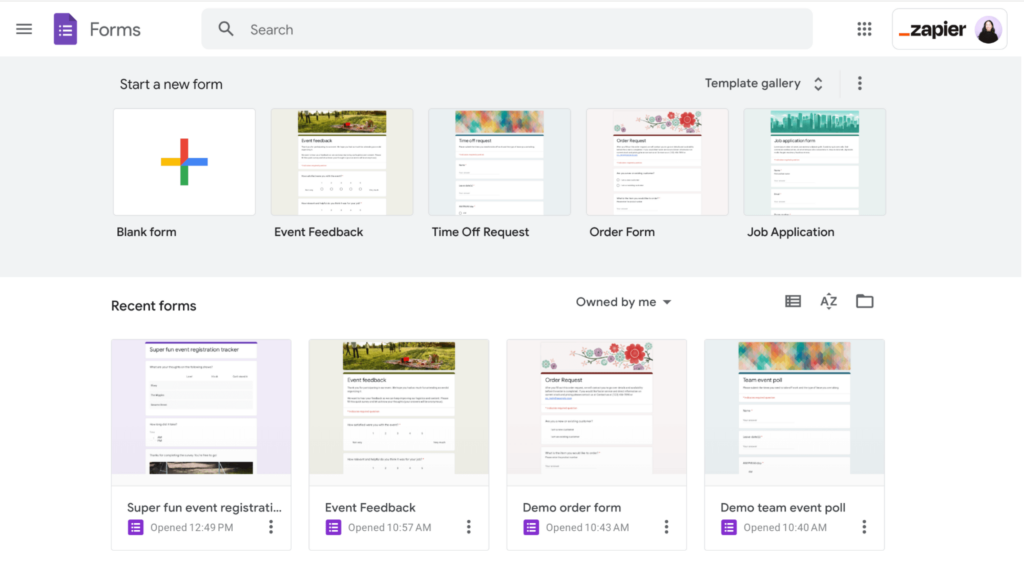
For basic surveys, registrations, or internal data collection, it gets the job done fast, and there’s no submission cap to worry about hitting mid-campaign.
That alone makes it the default for a lot of internal teams, since nobody has to be trained on it and nobody has to wait on a budget approval to use it.
Pros:
- Completely free with no response caps
- Drag-and-drop editor that’s already familiar to most people
- Real-time charts with a direct export to Google Sheets
- Conditional logic and scored quizzes built in
Cons:
- Minimal branding and customization options
- Reporting stays basic unless you export everything to Sheets
- Not built for CRM-connected or payment-based workflows
Capterra Rating: 4.7/5
Pricing: Free with a personal Google account. Bundled into Google Workspace, which starts at $7/user/month billed annually for teams that want a custom domain and admin controls.
3. Typeform: Best for Conversational, High-Completion Feedback Forms
I came across Typeform through a founder friend who was struggling with people abandoning lead forms halfway through.
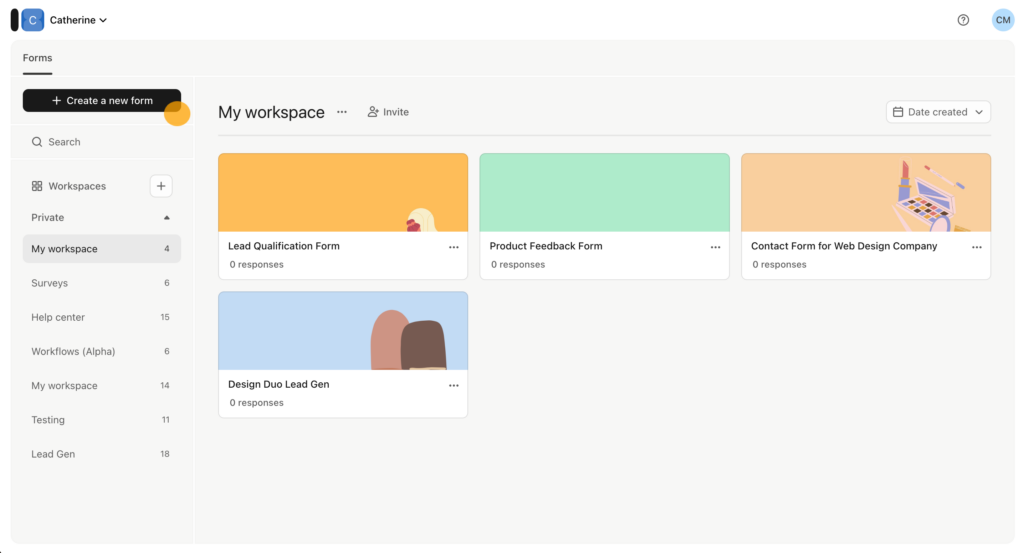
Long forms scare people off, and Typeform’s one-question-at-a-time format fixes that by making a form feel like a conversation instead of a task.
I’ve used it for customer feedback, onboarding, and lead qualification, and the smoother respondent experience directly improved completion rates each time.
Pros:
- One-question-at-a-time format built specifically to reduce drop-off
- Built-in photo and video library for visually rich forms
- Customizable layouts and themes to stay on-brand
- Conditional logic to surface the right question at the right time
Cons:
- Response volume is metered by plan, and the cap is strict once you hit it
- Calculator fields and branding removal require higher-tier plans
- Payment collection is Stripe-only, with no PayPal or regional processors
Capterra Rating: 4.7/5
Pricing: Free plan with 10 responses/month. Paid plans start around $29/month, billed annually.
4. Jotform: Best for Forms With Embedded Payments and Registrations
Several teams I’ve spoken with reach for Jotform whenever a form needs to feel like a full process, not just a list of questions.
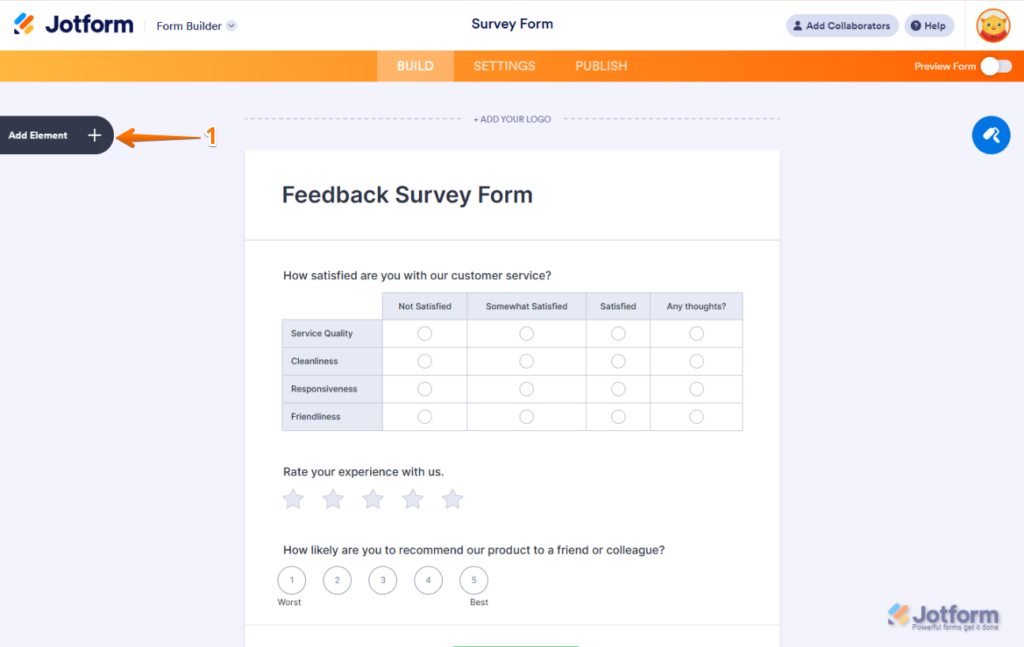
One nonprofit ops manager described running paid workshop registrations and hitting real limitations with simpler tools before switching.
What stands out is how much functionality fits into one form without it feeling cluttered: payments, conditional steps, file uploads, and scheduling, all in the same flow.
Pros:
- HIPAA-compliant forms available without custom coding
- Deep customization across layout and fields
- Native integrations with HubSpot, Slack, Google Sheets, and PayPal
- Syncs with Google Calendar for automated appointment scheduling
Cons:
- Free plan caps out at 5 forms and 100 submissions per month
- Some users report frequent price increases across renewal cycles
- HIPAA and advanced security features are locked to the top-tier plan
Capterra Rating: 4.7/5
Pricing: Free plan available. Paid plans start around $39/month.
5. Microsoft Forms: Best for Quick Internal Surveys Inside Microsoft 365
In most corporate teams I’ve worked with, Microsoft Forms is the tool people reach for by default, mainly because it’s already inside Microsoft 365.
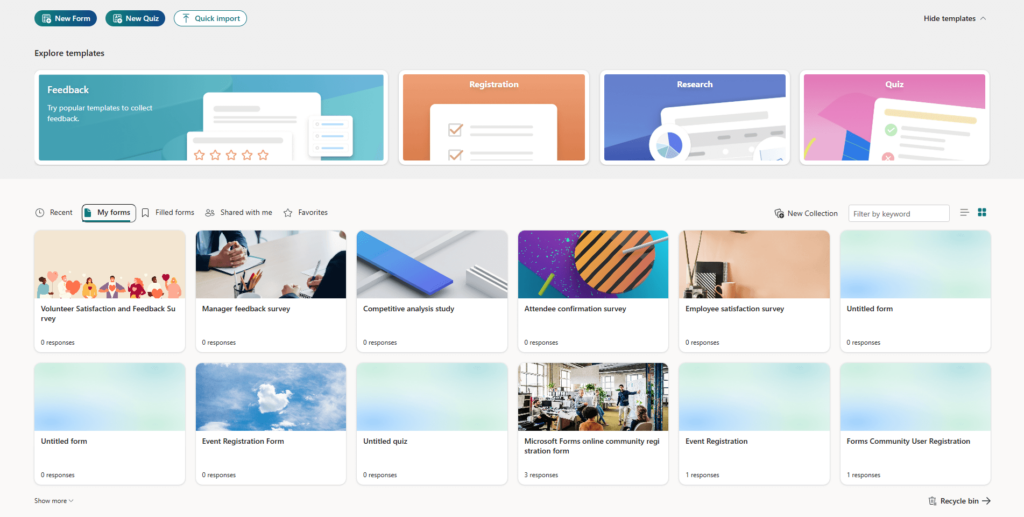
If a team already lives in Teams and Outlook, it feels like an extension of tools they use daily, not a new platform to learn.
It’s fast to build, easy to share through Teams or email, and shows results the moment responses start coming in.
Pros:
- Real-time charts and summaries visible instantly
- Seamless Excel export for deeper analysis
- Works on any device or browser with no extra setup
- Built-in branching for more relevant, focused responses
Cons:
- Limited font and theme customization for customer-facing forms
- Designer interface feels cluttered with too many competing elements
- Not built for external lead capture or payment workflows
Capterra Rating: 4.6/5
Pricing: Bundled into Microsoft 365, which starts from $6/user/month.
6. Paperform: Best for Flexible, Design-Forward Lead Capture Forms
Several independent creators I know turned to Paperform because they wanted more creative control without feeling boxed into a rigid template. It reads less like a form builder and more like a blank canvas you shape yourself.
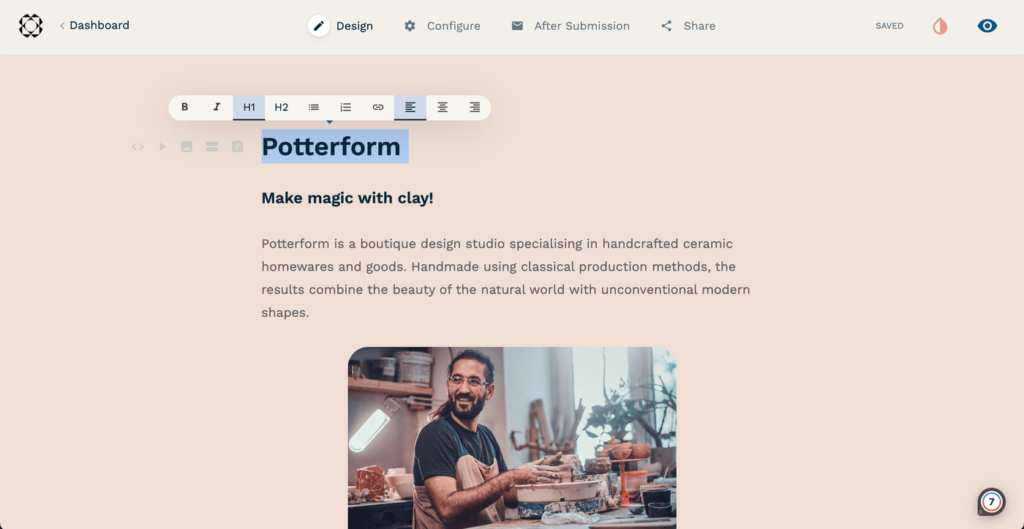
For lead capture, campaign surveys, or small independent projects where presentation matters, that flexibility shows.
Custom HTML and CSS access means the form can actually look like the rest of your site, not like an embedded widget bolted onto it.
Pros:
- Drag-and-drop editor with a genuinely open layout
- Autopilot mode for automating recurring, unsupervised tasks
- Custom HTML and CSS support for full design control
- 27+ question fields with conditional logic and scoring
- Built-in payment collection for products, services, and donations
Cons:
- Some niche features, like automatic age calculation, aren’t available yet
- Multi-screen question flow can feel slow for shorter forms
Capterra Rating: 4.8/5
Pricing: Plans start around $24/month.
7. Formstack: Best for Compliance-Heavy, Enterprise Workflow Forms
Formstack tends to come up when compliance, accuracy, and deep integrations matter more than speed.

One healthcare administrator I spoke with needed forms that met strict regulatory standards and pushed data directly into internal systems without manual intervention.
Worth flagging directly: Formstack’s Capterra rating sits lower than most others on this list, and it carries a real, recurring pattern of billing and cancellation complaints on Trustpilot that a single-star rating doesn’t capture.
Pros:
- One-question-at-a-time mobile format to reduce bias and scrolling
- Save-and-resume support for longer forms
- Electronic signature capture from any device
- Fully responsive forms across devices with no extra setup
Cons:
- Lower Capterra rating than most others on this list, with a documented pattern of billing and cancellation complaints
- Default designs look dated, and real customization needs CSS knowledge
- Editor panel is cramped, making complex logic harder to manage
Capterra Rating: 4.0/5
Pricing: Plans start around $83/month.
8. WPForms: Best for Mobile-Responsive WordPress Forms
WPForms makes sense the moment your site runs on WordPress and you want forms that fit without extra development work.
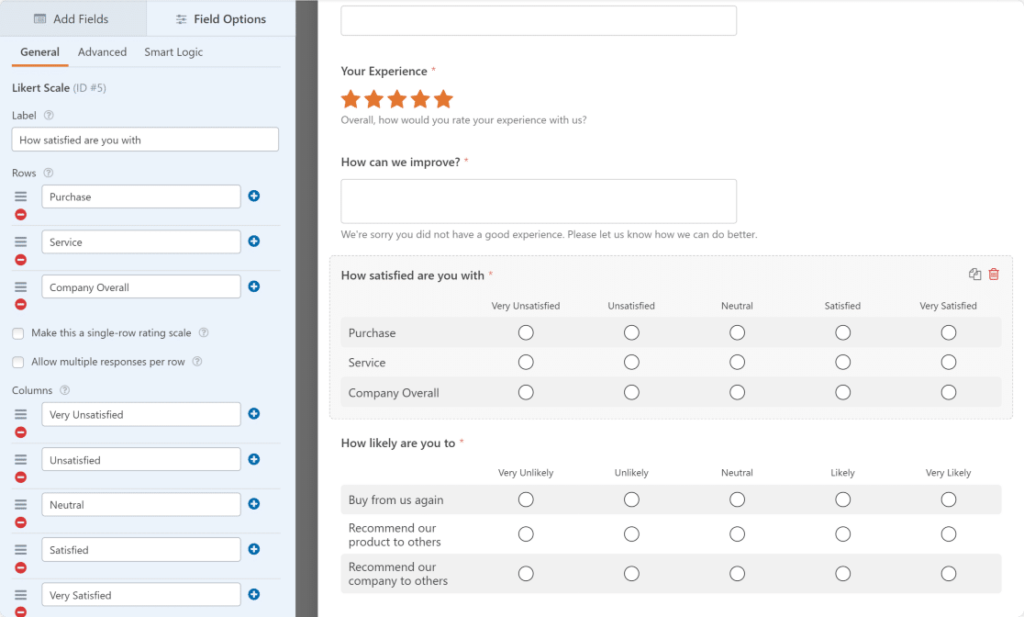
Everything lives inside the WordPress dashboard, so building and managing forms feels native from the start.
One thing to know before you buy: the entry-tier plan doesn’t include Zapier or native HubSpot integration.
Reviewers specifically flag having to jump to the $199.50/year Pro tier to unlock that, so check which tier actually covers your integration needs before committing.
Pros:
- Fully responsive forms across mobile, tablet, and desktop
- Smart conditional logic for higher-performing forms
- Instant lead notifications for immediate follow-up
- Payment and donation collection without coding
Cons:
- Entry-tier plan excludes Zapier and native HubSpot integration
- Not fully accessibility-approved in some regions
- Advanced features require a higher-tier annual plan, not a monthly option
Capterra Rating: 4.3/5
Pricing: Plans start around $49.50/year for the entry tier.
9. Gravity Forms: Best for Advanced WordPress Logic and Payment Forms
I first learned about Gravity Forms from a WordPress developer who insisted it was the most flexible option for custom logic without hacking things together.

It’s built with WordPress in mind, and that shows the moment you start configuring anything beyond a basic contact form.
For payment-driven projects like subscriptions and membership applications, where pricing rules and conditional flows have to align exactly, it holds up well once configured.
Pros:
- Visual editor for designing and embedding WordPress forms quickly
- Conditional field, section, and page visibility based on user input
- Secure data collection at every step
- Native document and file upload support inside forms
Cons:
- Meaningful design customization often requires paid add-ons
- Complex payment flows can require multiple add-ons or custom setup
- Real learning curve before advanced configuration feels smooth
Capterra Rating: 4.6/5
Pricing: Plans start around $44/year.
10. HubSpot Forms: Best for Lead Generation Tied Directly to a CRM
HubSpot Forms makes the most sense when lead generation is a serious, tracked part of the business, not a side task.

The draw most teams mention is that there’s no gap between someone submitting a form and that lead appearing in the CRM, tagged and ready for follow-up.
Teams use it for lead capture, content downloads, and campaign landing pages, and the visibility into where a lead came from is a real advantage over a standalone form tool bolted onto a CRM after the fact.
Pros:
- Automatically adds form submissions to HubSpot’s CRM as qualified leads
- Drag-and-drop editor for building customizable forms in minutes
- Automated follow-up emails triggered after form completion
- Full visibility into lead source and downstream activity
Cons:
- Styling options are limited for highly customized site designs
- Editing or remapping fields after creation is cumbersome
- Real value requires buying into the broader HubSpot ecosystem
Capterra Rating: 4.5/5
Pricing: Starts $7/month/seat as part of Marketing Hub.
Which Online Form Builders Are Worth Your Time First?
A shortlist of three, sorted by the workflow each one solves best.
1. ProProfs Survey Maker: Best for Teams That Need More Than a One-Off Form
A single contact form doesn’t need much thought. A recurring NPS or CSAT program does, since it has to survive quarter after quarter without getting rebuilt from scratch each time. That’s the specific job ProProfs Survey Maker is designed around.
Describe the survey’s purpose in plain language, and the AI Survey Maker hands back a working form with logic already set.
Layer in scoring, and the same account doubles as a training assessment or lead-qualification tool the next time you need one.
Because the plan is priced by response volume rather than seats, adding another teammate to the account doesn’t touch the bill.
Choose This If: you’re running recurring surveys, NPS, or scored assessments, and you want one tool that doesn’t need replacing as your program grows.
2. Google Forms: Best for Speed Over Everything Else
Google Forms wins when the form needs to exist in the next five minutes, not the next hour.
There’s no learning curve, no submission cap, and no cost, which makes it the obvious default for internal polls, quick registrations, or a one-off data pull.
The tradeoff is real: branding is minimal, and the moment a form needs to connect to a CRM or collect payment, Google Forms stops being the right tool.
Choose This If: you need a free, no-friction form today, and you don’t need it to look like a branded, customer-facing experience.
3. Typeform: Best for Forms Where Completion Rate Actually Matters
Typeform earns its spot when the form itself is part of the brand experience, not just a data-collection afterthought.
The one-question-at-a-time format consistently lifts completion rates on customer-facing forms, onboarding flows, and lead qualification.
That polish comes at a cost, both in dollars and in the strict response caps on lower tiers, so it’s a stronger fit for lower-volume, higher-stakes forms than for high-volume internal data collection.
Choose This If: the respondent experience directly affects your conversion rate, and you’re willing to pay more per response for a noticeably better completion rate.
Evaluation Criteria
The evaluation of products or tools chosen for this article follows an unbiased, systematic approach that ensures a fair, insightful, and well-rounded review. This method employs six key factors:
User Reviews/Ratings: Direct experiences from users, including ratings and feedback from reputable sites, provide a ground-level perspective. This feedback is critical in understanding overall satisfaction and potential problems.
Essential Features & Functionality: The value of a product is ascertained by its core features and overall functionality. Through an in-depth exploration of these aspects, the practical usefulness and effectiveness of the tools are carefully evaluated.
Ease of Use: The user-friendliness of a product or service is assessed, focusing on the design, interface, and navigation. This ensures a positive experience for users of all levels of expertise.
Customer Support: The quality of customer support is examined, taking into account its efficiency and how well it supports users in different phases, setting up, addressing concerns, and resolving operational issues.
Value for Money: Value for money is evaluated by comparing the quality, performance, and features. The goal is to help the reader understand whether they would be getting their money’s worth.
Personal Experience/Experts’ Opinions: This part of the evaluation criteria draws insightful observations from the personal experience of the writer and the opinions of industry experts.
FREE. All Features. FOREVER!
Try our Forever FREE account with all premium features!
What Should You Look for in an Online Form Builder?
Run any shortlist through this before booking a demo.
| Question to Ask | Why It Matters |
| Does the free plan’s cap match your actual volume? | Avoids a mid-campaign scramble to upgrade |
| Is the integration you need included, or gated to a higher tier? | Zapier, HubSpot, and Salesforce access often sit behind Pro plans |
| Does it support conditional logic or scoring? | Needed for assessments, qualifications, and longer forms |
| Is the Capterra rating consistent across other review sites? | A gap between platforms, like Formstack’s, is worth investigating |
| Does it fit your existing stack (WordPress, Microsoft 365, CRM)? | Native fit avoids embed friction and duplicate logins |
| Can a non-technical team member build a form without help? | Determines real adoption, not just purchase |
A ready-to-use starting point, if you’re building a lead capture form today:
| Quick Lead Capture Form Starter (5 Fields) Full name Work email Company name What are you looking to solve? (open text) Best time to reach you (dropdown: morning, afternoon, evening) |
Which Online Form Builder Should You Choose?
Match the tool to the workflow, not the other way around.
A lead form that needs to land cleanly in your CRM, a recurring NPS survey, and a payment-collecting registration form are three different jobs, and the tool built for one usually isn’t the strongest choice for another.
When the job is recurring feedback, NPS, or a scored assessment, ProProfs Survey Maker is built specifically for that: an AI-assisted builder, scoring built in, and a plan priced by response volume so your team can grow without the bill jumping with it.
Start with ProProfs AI Survey Maker with your own use case.
Frequently Asked Questions
Should you trust star ratings alone when choosing an online form builder?
Not entirely. A star rating provides a useful starting point, but it doesn't always reveal issues around pricing, support, billing, or cancellations. Compare ratings across multiple review platforms and pay attention to recent feedback. Also consider whether reviews come from businesses similar to yours, since enterprise and small-business experiences can differ significantly.
What is the difference between an online form builder and an online form creator?
There is no meaningful difference between the two terms. Both generally refer to software that lets you create your survey, customize, publish, and collect responses through online forms without writing code. Different companies may use one term over the other for marketing purposes, but the underlying functionality and use cases are largely the same.
Can I prevent duplicate or unauthorized responses?
Yes, most modern form builders offer controls to reduce duplicate or unauthorized submissions. Depending on the platform, these can include unique response links, login requirements, PIN protection, IP restrictions, or one-response-per-user settings. These features are especially useful for employee surveys, assessments, voting forms, and other situations where duplicate responses could compromise the accuracy of your results.
Can I distribute a form to people without email or a smartphone?
Yes. You can distribute forms through shareable links, QR codes, website embeds, tablets, or kiosk-style setups. For people without email access, a printed QR code or an on-site device can provide an alternative way to participate. The best approach depends on your audience, environment, and whether respondents have access to an internet-connected device.
Does the form integrate with our CRM, email tool, or reporting stack?
It depends on the platform and your subscription plan. ProProfs Survey Maker, Jotform, and HubSpot Forms offer integrations with popular business tools, while other platforms may rely on Zapier or similar connectors. Before choosing a builder, check whether it integrates directly with the specific CRM, email platform, analytics tool, or reporting system your team already uses.
Can I create scored forms or quizzes with automatic calculations?
Yes, but scoring and calculations aren't available in every form builder. ProProfs Survey Maker, Google Forms, and Paperform offer ways to calculate or score responses, while simpler contact-form tools may focus only on collecting information. If you're creating assessments, quizzes, lead qualification forms, or evaluations, confirm the platform supports the scoring logic you need.
How do I make sure responses stay anonymous and secure?
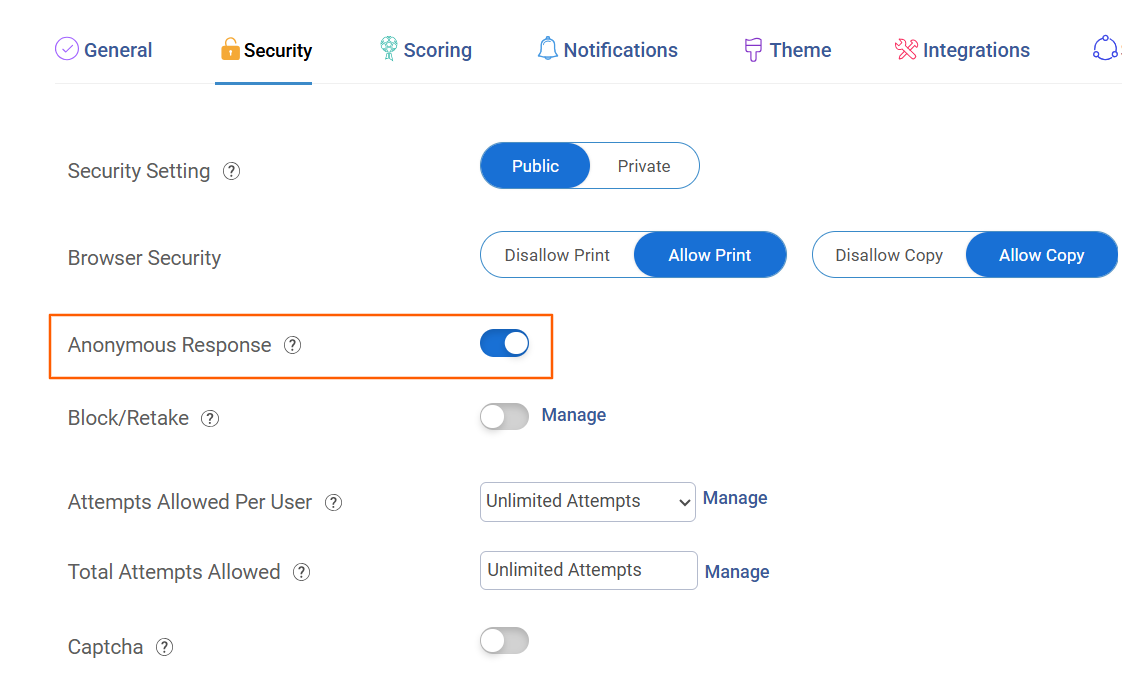
Look for features such as anonymous response settings, encryption, access controls, and GDPR compliance. Also check what respondent information the platform collects automatically, since a form can be labeled anonymous while still capturing identifying metadata. Before publishing, review the platform's privacy settings carefully and test the form yourself to confirm that identifying information isn't being recorded.
Is Google Forms good enough for a small business, or do I need something more?
Google Forms is often sufficient for simple surveys, internal polls, registrations, and basic data collection. You may need a more specialized platform when you require advanced branding, CRM integrations, payment collection, scoring, skip logic and branching, or detailed reporting. Tools such as ProProfs Survey Maker and Jotform can provide these capabilities while remaining accessible to small and growing teams.
Do online form builders work well on mobile devices?
Most modern form builders use responsive designs that adapt forms to smartphones and tablets. Platforms such as ProProfs Survey Maker, WPForms, and Formstack support mobile-friendly forms, but responsiveness doesn't guarantee an ideal experience. Test the finished form on an actual phone before launch, particularly if it includes long questions, complex logic, file uploads, or multiple sections.
FREE. All Features. FOREVER!
Try our Forever FREE account with all premium features!

 We'd love your feedback!
What did you like & how can we make it even better?

 Thanks for your feedback!
 Ask Your Question
Have a question? Get expert help to make your decision easier.