
I’ve spent the better part of my career running survey programs across industries, and I’ve picked the wrong tool more than once. Not just money. Time, response rates, and insights I needed three months earlier.
In this guide, I’ll cover 10 popular online survey tools that I have researched and tested. Over the years, I’ve used ProProfs Survey Maker, Qualaroo, SurveySparrow, and Typeform directly.
For the remaining six tools on this list, I’ve drawn on detailed feedback from CX leads, HR managers, and market researchers I know who run them in production, as well as verified Capterra reviews.
The guide is organized around use cases, not just features. You’ll also find a comparison table, a decision framework, and my top three picks to help you move faster than I did.
What Is an Online Survey Tool?
An online survey tool is software that lets you build, send, and analyze questionnaires through digital channels like email, web links, QR codes, and in-app placements. It automates data collection, calculates metrics like NPS and CSAT scores, and generates reports in real time, replacing manual outreach and spreadsheet-based analysis.
I’ve seen teams spend months building features their customers never asked for, simply because they had no reliable way to ask.
Online survey tools fix that.
They give you a repeatable system for collecting feedback at scale, turning what used to be a slow, manual process into something that runs automatically and produces data your team can act on the same day.
Here’s where they make the biggest difference:
- Customer Programs: NPS and CSAT surveys tell you whether customers will stay, refer others, or quietly leave. Without a tool running these on a schedule, you find out too late.
- Employee Engagement: Anonymous pulse surveys surface problems that never reach a manager’s inbox. Anonymity is what makes the data honest.
- Product Decisions: In-app feedback at the moment of experience tells you why users drop off, not just that they did.
- Market Research: Structured questionnaires let you validate assumptions before you invest, rather than after.
The difference between a good survey tool and a bad one is not just in the builder. It’s in what happens after a response comes in: how quickly you can filter it, segment it, and share a report that matters to the person reading it.
10 Best Online Survey Tools That Are Worth Your Time
Here’s a quick comparison of all 10 tools, with verified Capterra ratings and starting prices:
| Tool | Best For | Capterra Rating | Starting Price |
|---|---|---|---|
| ProProfs Survey Maker | NPS, CSAT, and employee engagement | 4.8/5 | Free; $19.99/month |
| Qualaroo | In-app and website sentiment feedback | 4.7/5 | Free; $19.99/month paid |
| SurveySparrow | Conversational surveys | 4.4/5 | $19/month |
| Typeform | Engaging, visual surveys | 4.7/5 | $28/user/month |
| SurveyMonkey | General-purpose survey analysis | 4.6/5 | $30/user/month |
| Jotform | Payment collection with surveys | 4.7/5 | $34/month |
| Microsoft Forms | AI-assisted internal forms | 4.6/5 | $99.99/year |
| Zoho Survey | GDPR-compliant surveys | 4.6/5 | $7.42/month |
| Google Forms | Free basic surveys | 4.7/5 | Free |
| QuestionPro | Complex enterprise surveys | 4.8/5 | $83/user/month |
Now let’s get into what each tool actually does well, where it falls short, and who it’s really built for.
1. ProProfs Survey Maker: Best for Easily Creating Custom Customer Surveys, CSAT, CX, & NPS Forms Using AI
ProProfs Survey Maker is honestly one of the few online survey platforms I’ve stuck with across multiple roles because it scales without the usual headaches.
I’ve used it for NPS programs, employee engagement surveys, and lead qualification assessments, and nothing has broken across any of those use cases.
AI Survey Maker is what I reach for first now. I describe the survey goal in plain language and get a polished, branching survey back in seconds. That alone has significantly reduced my setup time for recurring programs.
Best For: Established businesses and growing teams that need unlimited surveys, advanced integrations, AI-powered creation, and scored survey capabilities without paying per user.
Pros:
- AI Survey Maker builds a complete survey from a plain-language prompt in seconds
- Access to 100+ professional templates and 1,000,000+ ready-to-use questions
- 20+ question types including NPS scale, Likert, ranking, slider, and image choice
- Skip logic & branching and scored surveys with custom result pages
- Full branding and customization, including white-label capabilities
- Seamless integrations with Salesforce, HubSpot, Zapier, and more
- GDPR and ADA compliant with SSO and IP blocking
- 90+ language support for multilingual and global teams
Cons:
- No dark user interface for late-night work sessions
- Dedicated onboarding and account manager services are reserved for paid plans
User Rating: 4.8/5
Pricing: Forever free plan for up to 50 responses, with unlimited surveys. Paid plan starts at $19.99/100 responses/month.
Intel needed to run surveys for out-of-scope work and wanted something user-friendly that wouldn’t feel boring to respondents. Yarden Naor, Product Manager at Intel, found ProProfs Survey Maker easy to build with, noting the variety of question types and the large ready-to-use question library made customization straightforward.
The result: “Really liked the great survey reports. Easy to adjust and customize to needs. Great and quick customer service! Would definitely recommend it for others to use.”

2. Qualaroo: Best for Capturing Real-Time User Insights In-App & on Your Website Using Contextual, AI-Powered Micro-Surveys
Qualaroo is one of the tools I’ve used directly, and it’s the one I recommend when the problem is in-the-moment feedback rather than post-experience surveys.
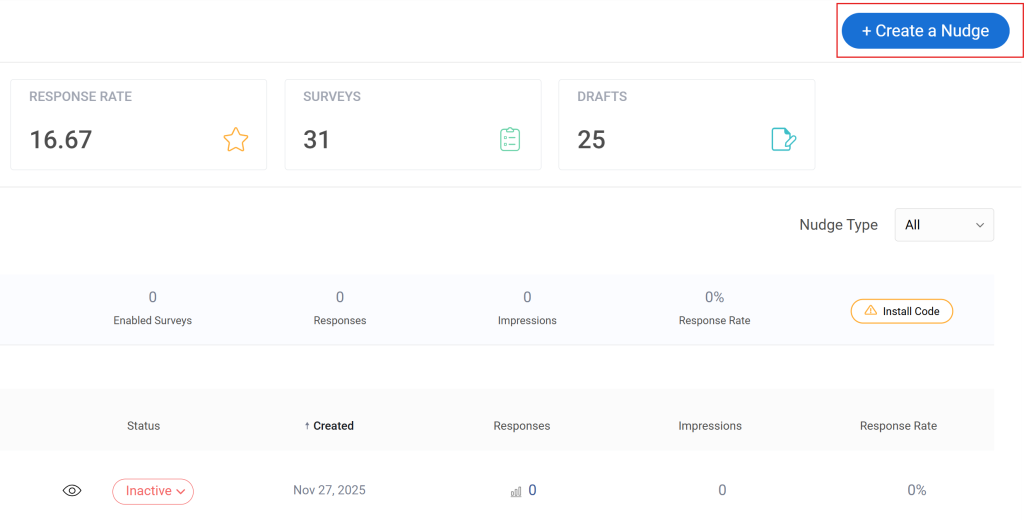
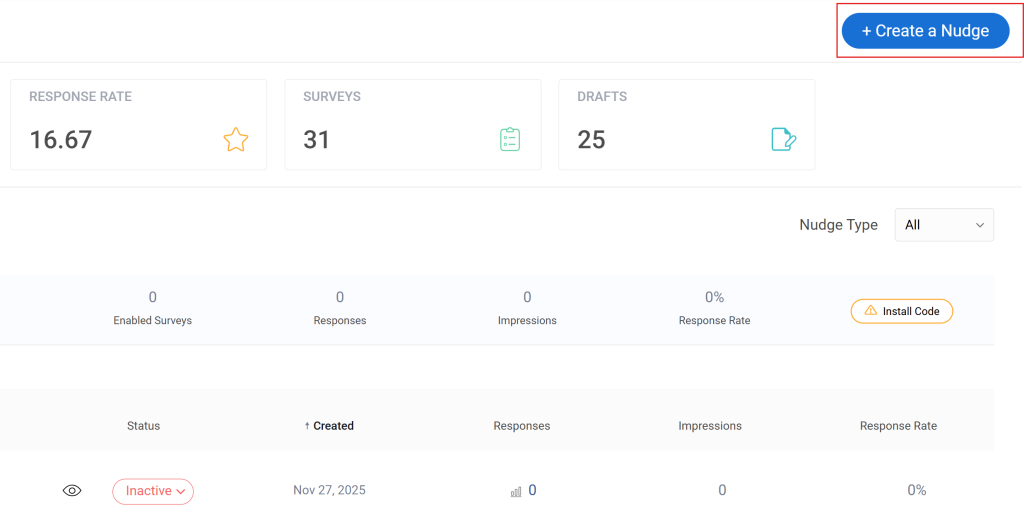
The Nudge™ widget is what sets it apart. It slides in while someone is actively on your site or in your app, not after they’ve left and the moment has passed.
I’ve used it to surface exit intent feedback and target specific user segments, and the IBM Watson-powered sentiment analysis turns open-text responses into readable themes without manual coding.
Best For: Businesses and product teams seeking real-time user insights by surveying visitors on their website, app, or prototypes at the exact moment of interaction.
Pros:
- Nudge™ surveys for websites, mobile apps, and prototypes (Figma, Adobe XD, InVision)
- AI-driven sentiment analysis powered by IBM Watson
- Advanced targeting by identity, behavior, geolocation, exit intent, and custom properties
- Branching and skip logic so respondents only see relevant follow-up questions
- Multilingual surveys in 70+ languages
- Customizable branding, colors, and logo
- In-app survey support for iOS and Android
Cons:
- Dedicated onboarding and account manager services are reserved for paid plans
- No downloadable or on-premise version available
User Rating: 4.7/5
Pricing: Free plan available with all premium features. Paid starts at $19.99/month. Business at $49.99/month. Enterprise at $149.99/month.
3. SurveySparrow: Best for Conversational Surveys With Higher Completion Rates
SurveySparrow is another tool I’ve run myself, specifically for CES and NPS programs where completion rates were an issue.
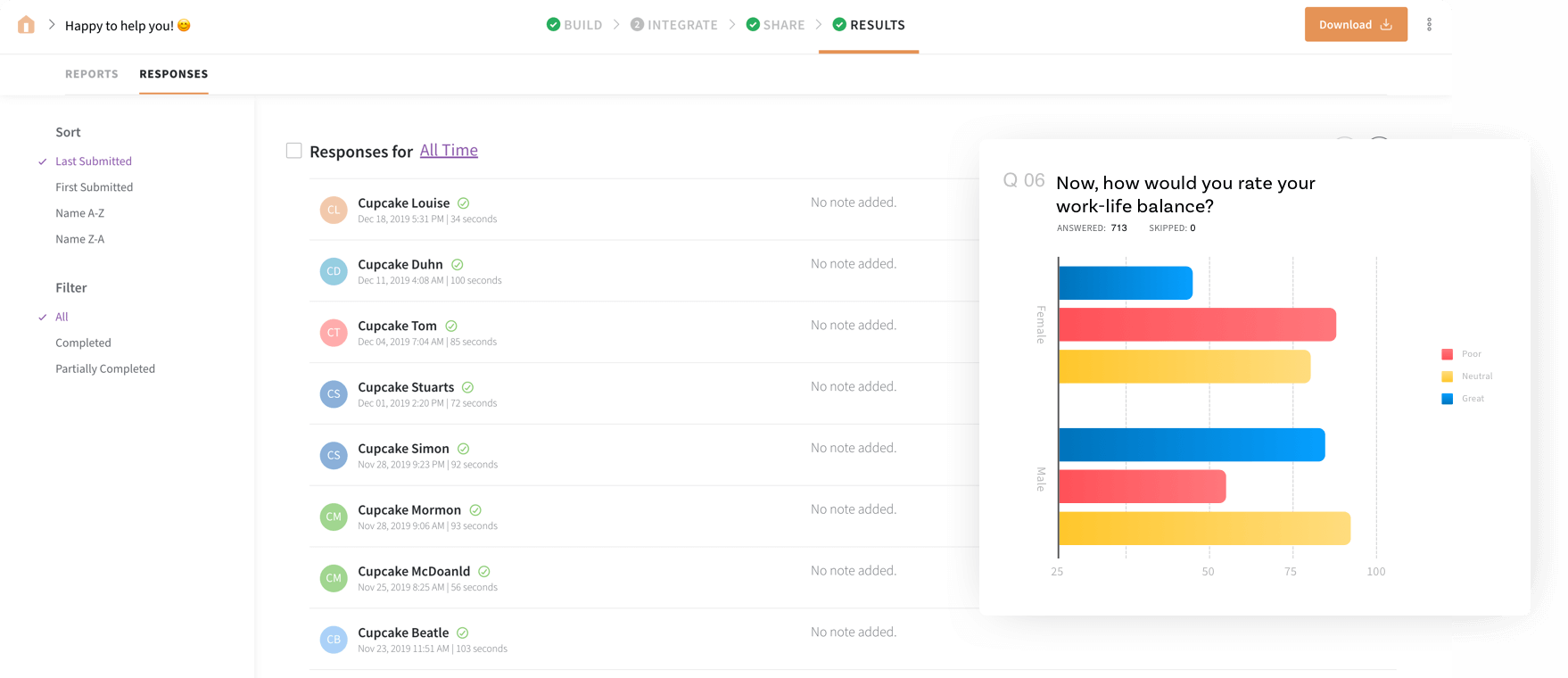
The chat-like format made a noticeable difference compared to the static forms we had been using. Respondents moved through it faster, and the drop-off at the midpoint dropped.
The built-in ticket management was a bonus I didn’t expect. When a response flagged a problem, it didn’t disappear into a spreadsheet. It became something the support team could actually act on.
Best For: Customer experience teams that want higher survey completion rates and need to connect feedback directly to follow-up actions.
Pros:
- Chat-like conversational survey format alongside classic survey mode
- Built-in ticket management for customer feedback and issue tracking
- Executive dashboard with segments, filters, and cross-tab analysis
- NPS, CSAT, and CES survey templates ready to deploy
- Integrations with Salesforce, HubSpot, Slack, and Zapier
Cons:
- No drag-and-drop editor for survey building
- Email marketing features are limited compared to dedicated tools
User Rating: 4.4/5
Pricing: Starts at $19/month.
4. Typeform: Best for Engaging, Visual Surveys That Improve Data Quality
Typeform is a tool I’ve used on projects involving younger respondent groups and brand perception research, where the experience of taking the survey mattered almost as much as the data.
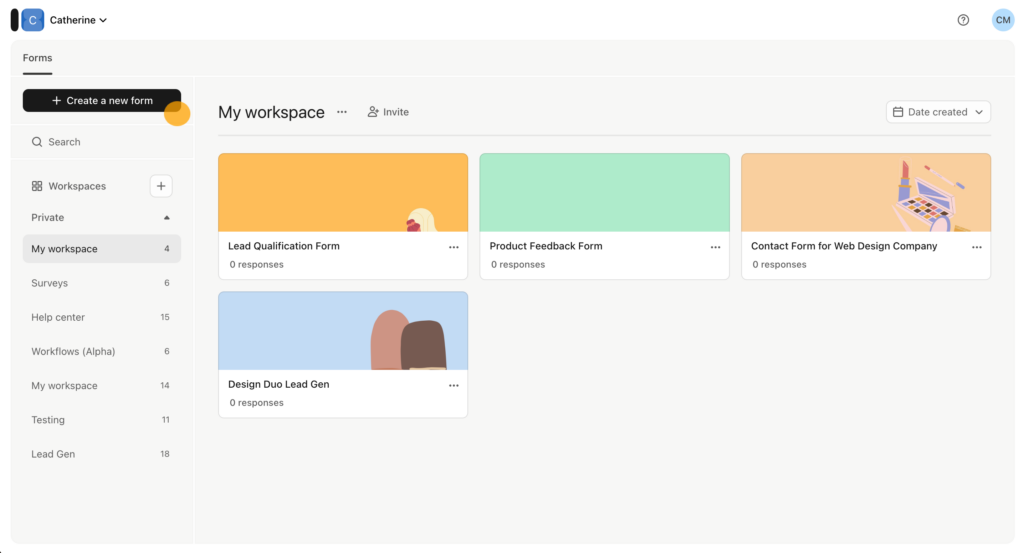
The one-question format kept people engaged in a way that a traditional multi-question layout simply didn’t.
The AI question suggestion tool is useful when starting from scratch. It won’t replace a researcher, but it gives you a solid starting point faster than a blank canvas.
Best For: Marketing and brand teams running customer research surveys where a polished, engaging respondent experience directly affects data quality and completion rates.
Pros:
- One-question-at-a-time format with support for photos and video
- AI-powered question suggestions and response theme analysis
- Conditional logic that personalizes the question path based on prior answers
- Built-in analytics dashboard with visual reports
- Hidden fields for tracking respondent source and campaign attribution
Cons:
- No mobile editing mode for surveys in progress
- The single-question format is limiting when cluster or matrix questions are required
User Rating: 4.7/5
Pricing: From $28/user/month.
5. SurveyMonkey: Best for General-Purpose Business Survey Analysis
SurveyMonkey is one I’ve heard about consistently from peers across industries, and the feedback is always the same: it’s solid for general-purpose surveys, but the analytics you actually want tend to sit behind a paid upgrade.
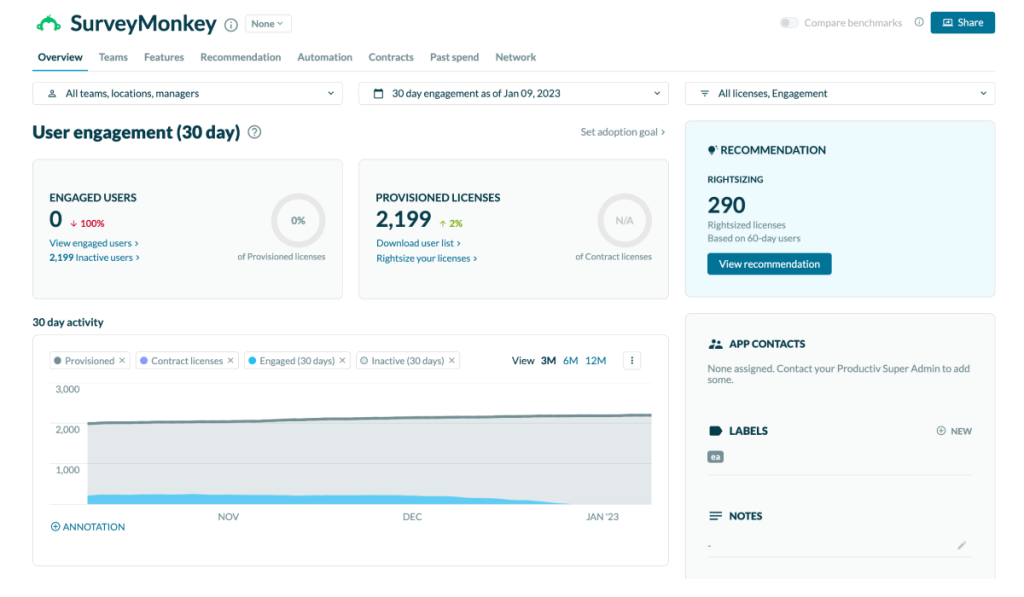
The template library is broad, branching logic is reliable, and the name carries weight with stakeholders who want a recognized platform.
Where it loses people is the cost-to-value ratio on anything beyond a basic plan, especially for teams that have been on it for a few years and are hitting feature ceilings.
Best For: Teams running general-purpose surveys for customer feedback, employee engagement, or market research who need a widely recognized tool with a broad template library.
Pros:
- Large library of ready-made and customizable templates across use cases
- Integrations with Teams, Slack, Zoom, and other business tools
- Wide range of built-in question types for different survey formats
- Real-time data visualization and response tracking
Cons:
- Mobile app stability issues have been flagged consistently in reviews
- Advanced analytics and sentiment analysis require premium plan upgrades
User Rating: 4.6/5
Pricing: From $30/user/month.
6. Jotform: Best for Collecting Payments Alongside Survey Responses
Jotform comes up often in conversations with event managers and healthcare administrators I know.
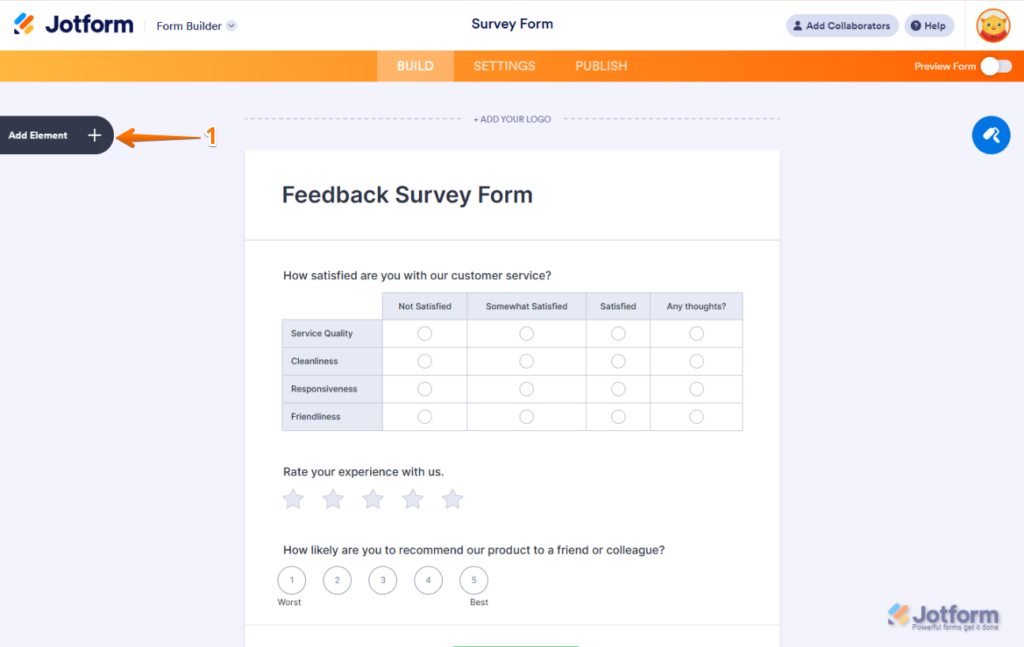
It’s the tool they reach for when a form needs to do more than collect data, specifically when payment processing, e-signatures, or automated follow-up workflows are part of the same flow.
I’ve heard it described as the most practical option for anyone running registrations, intake forms, or anything where a transaction sits alongside a questionnaire.
Best For: Businesses that need to combine data collection with payment processing, e-signatures, or automated workflows in a single form experience.
Pros:
- 800+ templates with built-in payment and e-signature support
- Native integrations with Square, Stripe, PayPal, Adobe, Zoom, and HubSpot
- SSL data security and spam filtering are built in
- “Forms Analytics” feature for tracking response trends and submission behavior
- Autoresponder emails and ACH payment automation
Cons:
- Navigation and form management can be complex for new users
- Embedded surveys can be slow to load on some websites
User Rating: 4.7/5
Pricing: From $34/month.
7. WPForms – Best for customizable surveys with logics and reports
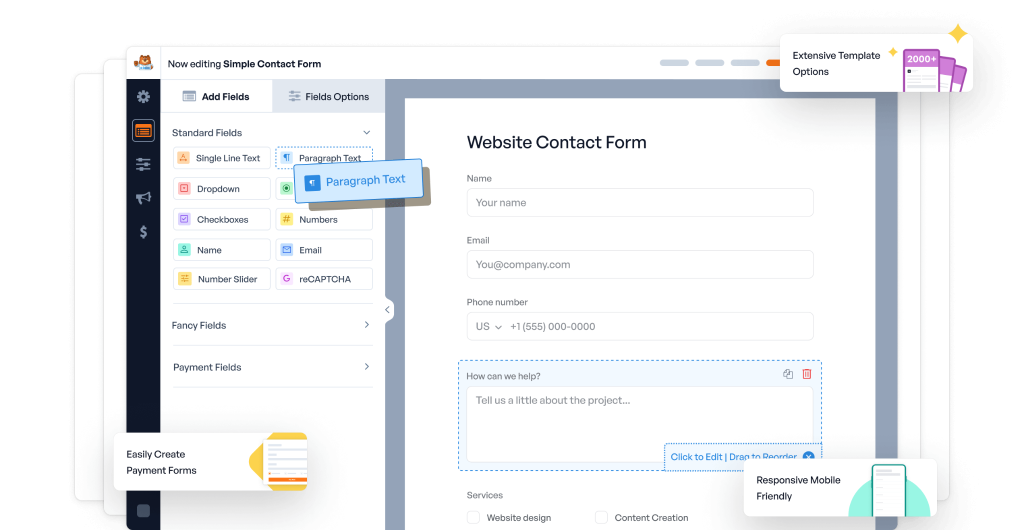
I added WPForms to this roundup since I’ve had it installed on several WordPress sites, and it’s one of the easiest survey tools I’ve worked with. What I like most is how fast I can go from an idea to a live survey. The one-click setup handles the basics, and the drag-and-drop builder makes it simple to change the layout, add conditions, or split a form into multiple pages.
The Surveys & Polls addon has been especially handy. It lets me create NPS surveys, rating scales, and real-time polls, supported with clear reports right inside my dashboard without extra plugins.
I’ve also recently tested WPForms AI, and it saves me a ton of time. For example, I can generate entire forms from a prompt, and even enable AI-powered calculations for cost estimates.
Pros:
- Easy drag-and-drop builder with 2,000+ ready-to-use templates
- Advanced features like conditional logic, spam protection, and multi-page layouts
- AI tools that builds full surveys, auto-translates forms, and refines field logic
- Built-in reporting with real-time charts, and dashboard insights
- Integrations with payment platforms, marketing tools, and page builders
Cons:
- Advanced features like payment integrations, conditional logic, and multi-page forms are only available for paid plans
- Custom form design needs CSS knowledge
User Rating: 4.7/5
Pricing: Free version available. Paid plans start at $49.50/year.
7. Microsoft Forms: Best for AI-Assisted Internal Surveys in Microsoft 365
Microsoft Forms is what I’d point an internal HR team toward if they’re already working entirely inside Microsoft 365 and need to run quick pulse surveys or training assessments without switching tools.
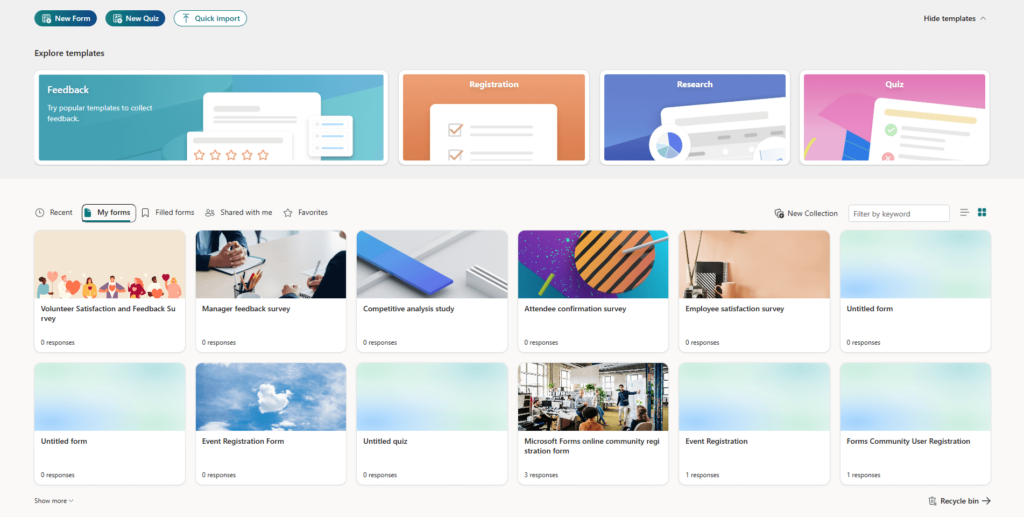
It’s low friction when everything else is already Microsoft, and the AI question generator does meaningfully cut setup time.
The limitation I’ve heard most from people who use it: the moment you need Salesforce integration, custom branding, or analytics beyond basic charts, it stops being enough.
Best For: Internal teams running employee surveys, quick polls, or training assessments inside a Microsoft 365 environment.
Pros:
- AI question suggestions based on the selected survey context
- Conditional logic for respondent-specific question paths
- Real-time data visualization with basic trend analysis
- Anonymous response collection is supported natively
- Simple external sharing without compromising internal security
Cons:
- Integration options outside the Microsoft ecosystem are limited
- Fewer answer type options compared to dedicated survey platforms
User Rating: 4.6/5
Pricing: From $99.99/year.
8. Zoho Survey: Best for GDPR-Compliant Surveys With CRM Integration
Zoho Survey is the one I’d recommend to any team already running on Zoho CRM.
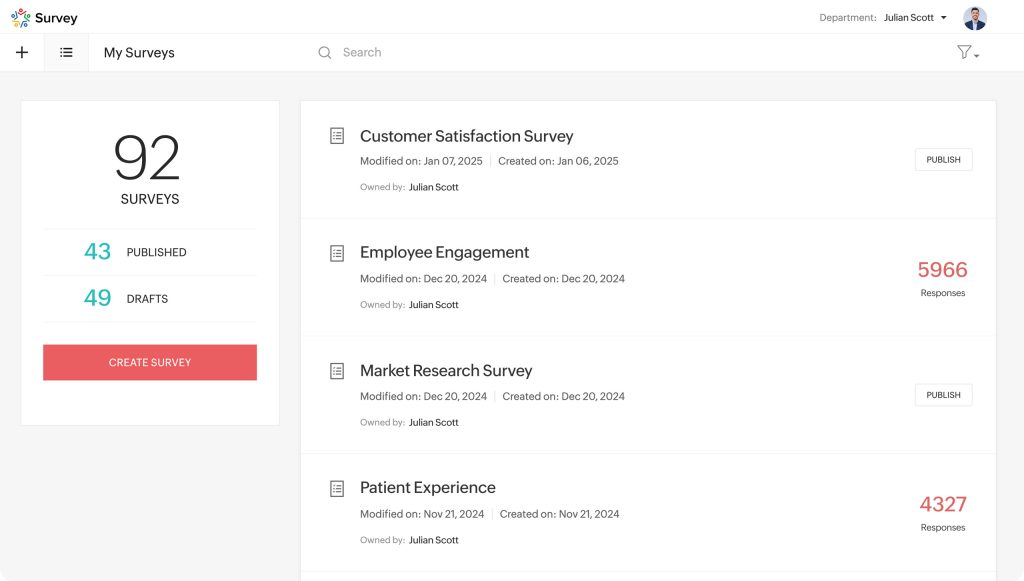
The native sync is the real value: every survey response lands on the right contact record automatically, so sales and support teams see feedback without logging into a separate dashboard.
From what I’ve gathered from colleagues in regulated industries, the built-in GDPR controls, CAPTCHA, and IP blocking also make it a safer default for EU-facing programs than most alternatives at this price point.
Best For: Teams already using Zoho CRM who need GDPR-compliant survey data flowing directly into their existing contact management system.
Pros:
- 200+ templates with drag-and-drop editor, logic branching, and question piping
- Native Zoho CRM integration for contact-level survey data sync
- Multi-language survey support for global respondent reach
- CAPTCHA and IP blocking for spam and bot protection
- GDPR-compliant data handling is built in at every pricing tier
Cons:
- Survey themes and layout customization options are limited
- The reporting interface takes time to learn and has a noticeable learning curve
User Rating: 4.6/5
Pricing: From $7.42/month.
9. Google Forms: Best for Free, No-Frills Surveys on a Zero Budget
Google Forms is the tool I still recommend when someone has no budget, needs something live today, and is surveying a small, familiar audience.
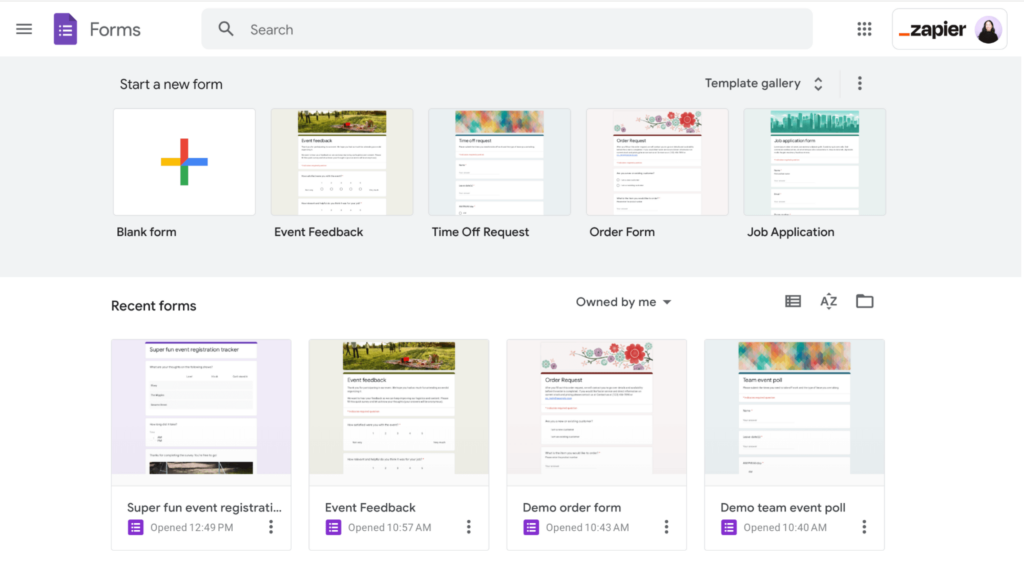
It’s genuinely capable of basic internal polls, event registrations, and simple feedback forms. The Google Sheets integration handles the data collection automatically.
Where I’ve seen it fall short, and where I’ve heard the same from others, is anything that requires scored outputs, meaningful branching logic, or a report you can hand to a stakeholder without building it yourself first.
Best For: Educators, small teams, and nonprofits running basic internal surveys or event registrations who need zero cost and zero setup time.
Pros:
- Free for all Google account users with no response limits
- Multiple question types, including grid, dropdown, linear scale, and file upload
- Real-time simultaneous editing and collaboration with team members
- Automatic response collection directly into Google Sheets
Cons:
- No advanced branching logic or scored survey capabilities
- Limited branding and customization options
User Rating: 4.7/5
Pricing: Free.
10. QuestionPro: Best for Complex Enterprise-Level Survey Research
I’d steer an enterprise research team toward QuestionPro when the requirements include offline data collection, respondent panel access, and statistical analysis such as conjoint or TURF.
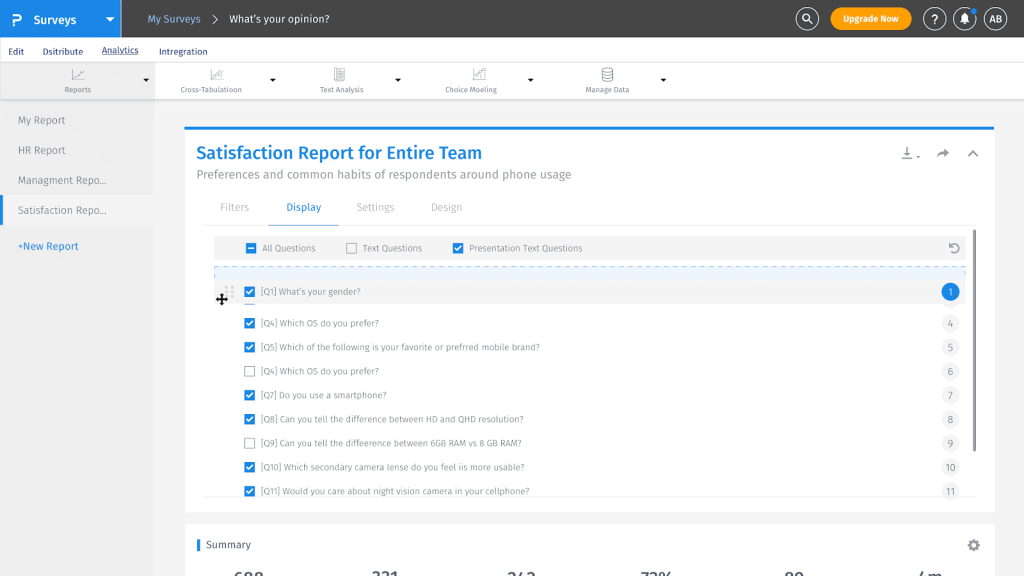
I haven’t used it directly, but several market research leads I’ve worked alongside have, and their consistent note is that it handles complexity that other tools on this list simply can’t.
The tradeoff is cost. At $99 per user per month for meaningful features, and with advanced capabilities priced on top of that, it is the most expensive tool on this list by a significant margin.
Best For: Enterprise teams and research agencies running complex, large-scale surveys with offline collection, respondent panel access, and advanced statistical analysis requirements.
Pros:
- Large question library with multiple choice, rating scale, matrix, image, and video types
- Distribution via email, SMS, QR code, social media, and respondent panels
- Offline survey mode for fieldwork without an internet connection
- Team collaboration with shared surveys, role-based permissions, and assigned access
- Real-time dashboard with cross-tabs, filters, and trend analysis
Cons:
- Advanced features cost extra, even on standard paid plans
- Limited customization and formatting options relative to the price point
User Rating: 4.8/5
Pricing: From $83/user/month.
What Are My Top 3 Picks Among These Online Survey Tools?
After testing and researching all 10 tools, here’s where my shortlist lands.
1. ProProfs Survey Maker
The strongest all-around pick for businesses running NPS, CSAT, employee engagement, or lead qualification programs. I’ve used it across multiple use cases, including market research, and it hasn’t let me down.
AI-powered survey creation, scored surveys with custom result pages, no per-user fees, and a forever-free plan with all premium features make it the most accessible full-featured option on this list.
2. SurveyMonkey
A solid pick for teams that need a widely recognized, general-purpose survey platform with a broad template library and reliable branching logic.
It works well for customer feedback, employee engagement, and market research programs where you don’t need deep custom analytics. The name also carries weight when you need stakeholder buy-in on tooling decisions.
3. SurveySparrow
The right choice for CX teams that need higher completion rates and a direct link between survey responses and support actions.
I saw the conversational format reduce drop-off noticeably in my own programs, and the built-in ticket management system means a negative response triggers a follow-up workflow rather than just adding a row to a dashboard.
How Did I Evaluate These Online Survey Tools?
My evaluation follows an unbiased, systematic approach to ensure a fair and well-rounded review. I applied six key factors consistently across all 10 tools:
- User Reviews / Ratings: Direct experiences from users, including ratings and feedback from reputable sites like Capterra, provide a ground-level perspective. This feedback is critical in understanding overall satisfaction and potential problems.
- Essential Features & Functionality: The value of a product is ascertained by its core features and overall functionality. Through an in-depth exploration of these aspects, the practical usefulness and effectiveness of the tools are carefully evaluated.
- Ease of Use: The user-friendliness of a product or service is assessed, focusing on the design, interface, and navigation. This ensures a positive experience for users of all levels of expertise.
- Customer Support: The quality of customer support is examined, taking into account its efficiency and how well it supports users in different phases: setting up, addressing concerns, and resolving operational issues.
- Value for Money: Value for money is evaluated by comparing the quality, performance, and features. The goal is to help the reader understand whether they would be getting their money’s worth.
- Personal Experience / Experts’ Opinions: This part of the evaluation criteria draws on my direct experience with the tools I tested personally, alongside insights gathered from CX professionals, HR managers, and market researchers who use these platforms in production.
FREE. All Features. FOREVER!
Try our Forever FREE account with all premium features!
How Do You Choose the Right Online Survey Platform for Your Use Case?
Most listicles stop at the tool descriptions and leave you to figure out the match yourself. Here’s the framework I use.
Step 1: Define the decision your survey will inform. A tool used to measure NPS across 5,000 customers needs different capabilities than one used for a 30-person internal pulse. I always start by writing down the specific output I need before I look at features.
Step 2: Match the tool to your use case.
| Your Primary Use Case | What You Need | Best Tool Match |
|---|---|---|
| Customer NPS or CSAT tracking | Scheduled sends, NPS scale, automatic scoring, CRM sync | ProProfs Survey Maker, SurveySparrow |
| Employee engagement at scale | Anonymity controls, scored outputs, department-level reporting | ProProfs Survey Maker, QuestionPro |
| Market research with large samples | Respondent panels, complex logic, TURF analysis | QuestionPro |
| In-app or website feedback | Pop-up nudges, exit intent, contextual timing | Qualaroo |
| Payment plus survey in one flow | Payment gateway integration, e-signatures | Jotform |
| Simple free surveys | No budget, basic questions, small audience | Google Forms |
| GDPR-regulated industries | IP blocking, CAPTCHA, CRM data sync | Zoho Survey |
| Visually engaging respondent experience | One question at a time, photos, video | Typeform |
| Internal Microsoft 365 teams | Microsoft ecosystem, AI question suggestions | Microsoft Forms |
Step 3: Check the pricing structure, not just the starting price. A free plan that caps responses at 50 is not really free for a business running ongoing customer feedback. I always check: response limits, whether analytics are behind a paid tier, and whether pricing is per user or per response. Per-response pricing scales better for growing teams.
Step 4: Test the reporting before you commit. The most common complaint I hear from peers is that analytics look great in demos but fall short in practice. I built a real survey, collected 10-20 test responses, and generated the report. If generating a shareable summary takes more than two minutes, that tool will slow me down every cycle.
Which Online Survey Tool Is Right for You?
If you run customer feedback, employee engagement, or market research programs and need a tool that handles NPS, CSAT, scored surveys, and CRM integrations without a per-user fee or a premium-tier paywall for analytics, I’d start with ProProfs Survey Maker.
The forever-free plan lets you build a real program and run it with real respondents before you spend a dime.
The clearest sign you’ve outgrown your current tool: you’re exporting raw data to a spreadsheet to build reports your stakeholders can read. That’s a workflow problem your survey platform should solve, not create.
Frequently Asked Questions
Which online survey platform is best for customer feedback?
For ongoing NPS and CSAT programs, you need scheduled sends, automatic scoring, and CRM integration. ProProfs Survey Maker and SurveySparrow both handle this well. For in-app or contextual website feedback captured at the moment of experience, Qualaroo is purpose-built for that use case.
What online survey software is best for small businesses?
Small businesses need a tool that is easy to set up, affordable as they grow, and produces reports their team can actually read. ProProfs Survey Maker fits this profile: a forever-free plan, per-response pricing instead of per-user, all premium features included, and simple reporting. Google Forms works for very basic needs but has no analytics depth.
What features should I look for in an online survey tool for businesses?
The non-negotiables are skip logic and branching, NPS and rating scale question types, real-time reporting with segmentation, CRM integration, and mobile-optimized design. Secondary features that matter as you scale are AI survey generation, scored surveys with custom result pages, white labeling, and anonymous response collection for employee programs.
How do I evaluate online survey tools before committing?
Test against six criteria: user reviews on G2 or Capterra, core features and question types, ease of use for non-technical admins, reporting depth, CRM and automation integrations, and value relative to cost, including what sits behind a paywall. Always build a real test survey and pull an actual report before signing anything.
Why do businesses use online survey tools instead of email or manual methods?
Email-based feedback is hard to quantify, impossible to segment, and slow to analyze. Survey tools automate distribution, enforce consistent question formats, calculate metrics like NPS automatically, and generate reports without manual work. For any team running a repeatable feedback program, whether monthly NPS, quarterly employee pulse, or post-event CSAT, the time savings alone justify the switch.
How do I improve response rates on online surveys?
Keep surveys to three to five questions where possible. Send at the right moment: right after a purchase, a support interaction, or an event. Use one automated reminder for non-completers. On mobile, confirm your survey renders cleanly on a small screen. Personalizing the subject line and the opening question consistently lifts open and completion rates.
Which survey platforms offer the best analytics and reporting?
For most businesses running NPS, CSAT, and employee engagement programs, ProProfs Survey Maker's real-time dashboard with filter, segment, and export capabilities is sufficient and considerably more accessible.
FREE. All Features. FOREVER!
Try our Forever FREE account with all premium features!

 We'd love your feedback!
What did you like & how can we make it even better?

 Thanks for your feedback!
 Ask Your Question
Have a question? Get expert help to make your decision easier.