

I have seen most employee surveys about management fail before anyone answers a single question.
It rarely happens because the questions are badly written. It happens because employees do not trust what comes after they click “Submit.”
In small teams, people worry they can be identified. In larger companies, many employees assume nothing will change anyway. So they protect themselves. They choose safe, middle-of-the-road ratings. They write polite comments that say almost nothing. They avoid details that could point back to them.
The result is predictable: the dashboard looks fine, but the truth is missing.
I wrote this guide to help you choose the right question set based on your goal and company size. Then I will walk through how to collect honest feedback without survey fatigue, low response rates, or manager defensiveness.
If you want feedback that is clear, honest, and actually useful, you are in the right place.
Employee Survey Questions About Management: What You Are Really Measuring
When employees answer survey questions about management, they are not thinking about titles or leadership theories.
They are thinking about their day.
They are thinking about whether priorities were clear this week, whether feedback felt fair, whether problems were handled calmly, and whether someone had their back when things got messy. That is what “management” looks like on the ground.
This matters because many surveys miss the point right here. They ask employees to judge personality or “leadership style” in the abstract. That makes people cautious, and it pushes responses toward safe, generic answers. It also leaves managers with feedback they cannot act on.
I get better results when I focus on behaviors and systems rather than personal traits.
In most teams, “management” in a survey comes down to a few controllable areas:
- Clarity and Direction: Do employees know what good work looks like, and what matters most?
- Support and Access: Can employees get help, context, and resources when they need them?
- Decision-Making and Follow-Through: Are decisions explained, and do actions match what was said?
- Fairness and Consistency: Are expectations applied evenly, and are concerns handled without favoritism?
- Growth and Feedback: Do managers invest time in coaching and honest performance conversations?
When your survey is built around these areas, employees are more likely to answer honestly, and managers are more likely to improve without feeling attacked. Here is a video for you to learn more about employee surveys:
Before You Ask Anything: How to Get Honest Answers (and Avoid the Anonymity Trust Trap)
Even the best employee survey questions about management will fall flat if employees do not trust anonymity. In small teams, people assume they can be “figured out” through filters like role, tenure, or location. When that fear kicks in, employees play it safe with neutral scores and vague comments. If you want real feedback, you have to design for privacy, not just promise it.
Design For Anonymity, Not Just Promise It
Saying “this survey is anonymous” is not enough. Employees look at how the survey is designed. Small group filters, detailed demographics, and narrow segmentation send the opposite signal, even if responses are technically anonymous.
Limit Segmentation Early
If a team has fewer than 8–10 people, do not slice the data further. Skip age, tenure, and role breakdowns. You can always add segmentation later, once trust is built.
Be Clear About What Managers Will See
Uncertainty fuels fear. Tell employees exactly what managers will and will not have access to. When expectations are clear, responses improve.
Separate Authentication From Identity
It is reasonable to verify that responses come from real employees. It is not necessary to tie those checks to visible identities. Authentication should protect data quality, not expose people.
Say What Will Not Be Used Against Anyone
This sounds obvious, but it matters. Make it explicit that survey results will not be used for performance reviews, compensation decisions, or punishment. Employees need to hear that upfront.
When employees believe the system protects them, they stop masking their feedback. That is when surveys start telling the truth.
Employee Survey Questions About Management (Copy-Paste Question Sets)
This is the part most people jump to first, and that is fine, as long as you use it the right way.
The question sets below are grouped by outcome, not by theory. Each set focuses on behaviors managers can actually control and improve. You do not need to use all of them. Pick the set that matches your goal, keep the survey tight, and make it clear what will happen after the responses come in.
1. Employee Survey Questions About Manager Communication and Clarity
These questions focus on how clearly work is assigned, explained, and followed through. Poor communication is one of the fastest ways for trust to erode, especially in remote or fast-moving teams:
- How clear are the priorities your manager sets for your work? [Likert Scale: Very Clear → Very Unclear]
- When priorities change, how clearly does your manager explain what changed and why? [Likert Scale: Very Clearly → Not Clearly at All]
- How often do you leave conversations with your manager knowing exactly what to do next? [Frequency Scale: Almost Always → Almost Never]
- How effectively does your manager share updates that affect your work? [Likert Scale: Very Effectively → Very Ineffectively]
- How easy is it to get a clear answer when you ask your manager a question? [Ease Scale: Very Easy → Very Difficult]
- How consistent is your manager’s communication across meetings, messages, and follow-ups? [Likert Scale: Very Consistent → Very Inconsistent]
- “I have the information I need from my manager to do my job well.” [Agreement Scale: Strongly Agree → Strongly Disagree]
- What is one change your manager could make to improve clarity or communication? [Open-Ended Text]
2. Employee Survey Questions About Trust, Respect, and Psychological Safety
These questions focus on whether employees feel safe being honest, raising concerns, and doing their work without fear of blame or backlash. Trust is not about likability. It is about fairness, consistency, and how managers respond when something goes wrong.
- To what extent do you feel comfortable raising concerns or problems with your manager? [Comfort Scale: Very Comfortable → Very Uncomfortable]
- When mistakes happen, how fairly does your manager handle the situation? [Fairness Scale: Very Fairly → Very Unfairly]
- How consistently does your manager treat team members with respect? [Likert Scale: Very Consistently → Very Inconsistently]
- How safe do you feel sharing an opinion different from your manager’s? [Safety Scale: Very Safe → Not Safe at All]
- To what degree do you believe your manager listens before making decisions that affect your work? [Agreement Scale: Strongly Agree → Strongly Disagree]
- How confident are you that feedback shared in good faith will not be used against you? [Confidence Scale: Very Confident → Not Confident at All]
- “My manager creates an environment where it is safe to speak up.” [Agreement Scale: Strongly Agree → Strongly Disagree]
- What, if anything, makes it harder to speak openly with your manager? [Open-Ended Text]
3. Employee Survey Questions About Manager Effectiveness and Decision-Making
These questions focus on how well managers turn plans into action. The goal is not to judge competence, but to understand whether decisions are clear, timely, and followed through in ways that help the team move forward.
- How effective is your manager at setting clear and realistic goals? [Likert Scale: Very Effective → Very Ineffective]
- How well does your manager prioritize work when everything feels important? [Likert Scale: Very Well → Very Poorly]
- When decisions are made, how clearly does your manager explain the reasoning behind them? [Clarity Scale: Very Clearly → Not Clearly at All]
- How timely are the decisions your manager makes that affect your work? [Timeliness Scale: Very Timely → Very Untimely]
- How well does your manager follow through on commitments and decisions? [Likert Scale: Always → Never]
- How effectively does your manager remove obstacles that slow your work down? [Effectiveness Scale: Very Effectively → Very Ineffectively]
- “Decisions made by my manager help the team do better work.” [Agreement Scale: Strongly Agree → Strongly Disagree]
- What is one decision-related change that would help you do your job better? [Open-Ended Text]
4. Employee Survey Questions About Support, Resources, and Removing Blockers
These questions focus on whether managers actively help teams do their work or unintentionally slow them down. Most frustration at work comes from blockers that never get addressed, not from lack of effort.
- How supported do you feel by your manager when you run into work-related challenges? [Support Scale: Very Supported → Not Supported at All]
- How quickly does your manager respond when you flag a blocker or issue? [Timeliness Scale: Very Quickly → Very Slowly]
- How effectively does your manager help remove obstacles that affect your productivity? [Effectiveness Scale: Very Effectively → Very Ineffectively]
- Do you have access to the tools, information, and resources you need to do your job well? [Agreement Scale: Strongly Agree → Strongly Disagree]
- When resources are limited, how clearly does your manager explain trade-offs and priorities? [Clarity Scale: Very Clearly → Not Clearly at All]
- How often does your manager proactively check in about roadblocks or workload issues? [Frequency Scale: Very Often → Never]
- “My manager helps create conditions that allow me to do my best work.” [Agreement Scale: Strongly Agree → Strongly Disagree]
- What is one blocker your manager could help remove or reduce? [Open-Ended Text]
5. Employee Survey Questions About Coaching, Feedback, and Performance Conversations
These questions look at how managers guide performance over time, not just during formal reviews. Good coaching shows up in regular feedback, clear expectations, and conversations that feel constructive rather than corrective.
- How clear is the feedback you receive from your manager about your performance? [Clarity Scale: Very Clear → Very Unclear]
- How useful is the feedback you receive in helping you improve your work? [Usefulness Scale: Very Useful → Not Useful at All]
- How comfortable do you feel discussing performance challenges with your manager? [Comfort Scale: Very Comfortable → Very Uncomfortable]
- How often does your manager give timely feedback rather than saving it for reviews? [Frequency Scale: Very Often → Never]
- How fair and consistent are performance expectations across the team? [Fairness Scale: Very Fair → Very Unfair]
- “My manager focuses on helping me improve, not just pointing out what went wrong.” [Agreement Scale: Strongly Agree → Strongly Disagree]
- How aligned do you feel with what success looks like in your role? [Alignment Scale: Very Aligned → Not Aligned at All]
- What would make performance or feedback conversations more useful for you? [Open-Ended Text]
6. Employee Survey Questions About Growth, Career Development, and Opportunity
These questions focus on whether employees see a future on the team. Growth does not always mean promotion. It often means learning, stretching opportunities, and honest conversations about direction.
- How supported do you feel by your manager in your professional growth? [Support Scale: Very Supported → Not Supported at All]
- How often does your manager discuss your development goals with you? [Frequency Scale: Very Often → Never]
- How clear are the expectations for growth or progression in your role? [Clarity Scale: Very Clear → Very Unclear]
- How fairly are growth opportunities shared across the team? [Fairness Scale: Very Fairly → Very Unfairly]
- How comfortable do you feel expressing interest in new responsibilities or roles? [Comfort Scale: Very Comfortable → Very Uncomfortable]
- “My manager actively supports my long-term development, not just short-term results.” [Agreement Scale: Strongly Agree → Strongly Disagree]
- How well does your manager connect your work to future opportunities or skills? [Effectiveness Scale: Very Well → Very Poorly]
- What is one thing your manager could do to better support your growth? [Open-Ended Text]
7. Employee Survey Questions About Recognition, Fairness, and Consistency
These questions help surface whether effort is noticed and whether standards are applied evenly. Lack of recognition and perceived favoritism are two quiet drivers of disengagement.
- How consistently does your manager recognize good work across the team? [Consistency Scale: Very Consistently → Very Inconsistently]
- How fair do you feel decisions are when it comes to recognition or praise? [Fairness Scale: Very Fair → Very Unfair]
- How often does your manager acknowledge contributions in a timely way? [Frequency Scale: Very Often → Never]
- How clearly does your manager explain why certain decisions or rewards are given? [Clarity Scale: Very Clearly → Not Clearly at All]
- “People on my team are treated fairly by our manager.” [Agreement Scale: Strongly Agree → Strongly Disagree]
- How confident are you that recognition is based on contribution, not visibility or favoritism? [Confidence Scale: Very Confident → Not Confident at All]
- How aligned do you feel between the effort put in and the recognition received? [Alignment Scale: Very Aligned → Not Aligned at All]
- What would make recognition or fairness feel more consistent to you? [Open-Ended Text]
8. Employee Survey Questions About Workload, Work-Life Boundaries, and Burnout Risk
These questions help surface whether work expectations are sustainable. Burnout rarely comes from one bad week. It usually builds when workload, boundaries, and recovery time are ignored for too long.
- How manageable is your current workload on a regular basis? [Manageability Scale: Very Manageable → Not Manageable at All]
- How well does your manager help prioritize work when everything feels urgent? [Effectiveness Scale: Very Well → Very Poorly]
- How respected do you feel your personal time and boundaries are by your manager? [Respect Scale: Very Respected → Not Respected at All]
- How often does your manager check in about workload or stress levels? [Frequency Scale: Very Often → Never]
- How comfortable do you feel saying no or pushing back on unrealistic deadlines? [Comfort Scale: Very Comfortable → Very Uncomfortable]
- “My manager helps prevent burnout on our team.” [Agreement Scale: Strongly Agree → Strongly Disagree]
- How supported do you feel when you need time off or flexibility? [Support Scale: Very Supported → Not Supported at All]
- What is one change that would make your workload more sustainable? [Open-Ended Text]
9. Employee Survey Questions About Inclusion, Belonging, and Team Dynamics
These questions focus on whether people feel included, heard, and treated fairly on the team. Inclusion shows up in everyday interactions, not just policies or statements.
- How included do you feel in team discussions and decisions that affect your work? [Inclusion Scale: Very Included → Not Included at All]
- How fairly does your manager consider different perspectives when making decisions? [Fairness Scale: Very Fairly → Very Unfairly]
- How safe do you feel being yourself at work on your team? [Safety Scale: Very Safe → Not Safe at All]
- How consistently does your manager create space for different voices to be heard? [Consistency Scale: Very Consistently → Very Inconsistently]
- “I feel a sense of belonging on my team.” [Agreement Scale: Strongly Agree → Strongly Disagree]
- How respectfully are disagreements handled on your team? [Respect Scale: Very Respectfully → Very Disrespectfully]
- How confident are you that team dynamics are handled fairly by your manager? [Confidence Scale: Very Confident → Not Confident at All]
- What is one thing your manager could do to improve inclusion or team dynamics? [Open-Ended Text]
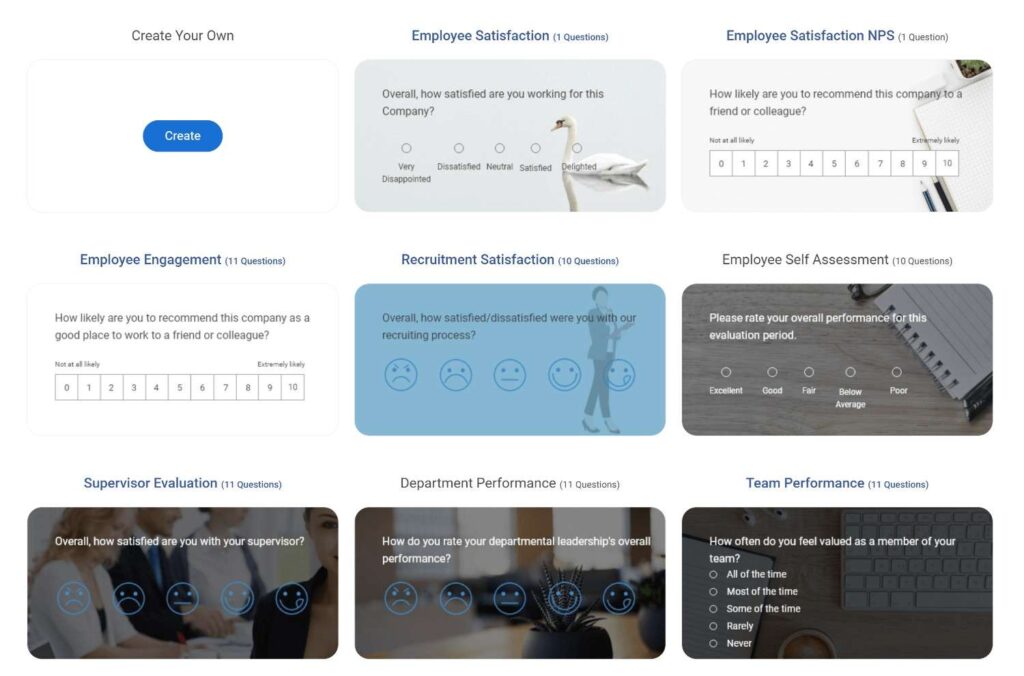
Here are a few templates you can use for employee feedback questions for managers:
The “Never Ask” List: Questions That Destroy Trust (and Give You Junk Data)
Some questions look harmless, even well-intentioned, but they quietly kill honesty. They either create fear, invite fake positivity, or raise expectations you cannot meet. Below are the most common offenders, along with safer alternatives.
Questions About Things You Cannot or Will Not Change
If leadership has already made a decision, asking for input only damages trust.
Avoid questions like:
- “How satisfied are you with your compensation?”
- “Do you agree with the company’s return-to-office policy?”
Ask this instead (if action is possible):
- “How clearly has leadership explained the reasons behind recent policy changes?”
If action is not possible, skip the topic entirely.
Questions That Sound Like Personal Judgments
These questions put employees in an uncomfortable position and invite them to mask.
Avoid questions like:
- “How competent is your manager?”
- “How confident are you in your manager’s abilities?”
Ask this instead:
- “How clearly does your manager explain decisions that affect your work?”
This keeps the focus on behavior, not character.
Vague “Test” Questions
Broad questions feel like traps. Employees do not know how direct they can be, so they stay vague.
Avoid questions like:
- “How can your manager support you better?”
- “What would you change about your manager?”
Ask this instead:
- “What is one process or decision that regularly slows your work down?”
Specific prompts lead to usable answers.
Questions Tied to Rewards or Punishment
When scores affect bonuses or rankings, honesty disappears.
Avoid questions like:
- “How would you rate your manager overall?” (when tied to performance reviews)
Ask this instead:
- “Which areas would benefit most from improvement over the next quarter?”
This shifts the focus from judgment to improvement.
Over-Segmented Demographic Questions
Too many filters signal risk, especially in small teams.
Avoid questions like:
- “Select your role, tenure, age range, and location” (in teams under 10)
Ask this instead:
- “Which team or function are you part of?”
Less detail often produces more honesty.
If a question creates fear, invites fake optimism, or sets expectations you cannot meet, it does not belong in your survey.
FREE. All Features. FOREVER!
Try our Forever FREE account with all premium features!
Types of Question Formats for Survey for Managers
Question format affects how honest and usable your data is. Pick the format based on what you need to learn, not what looks good on a report.
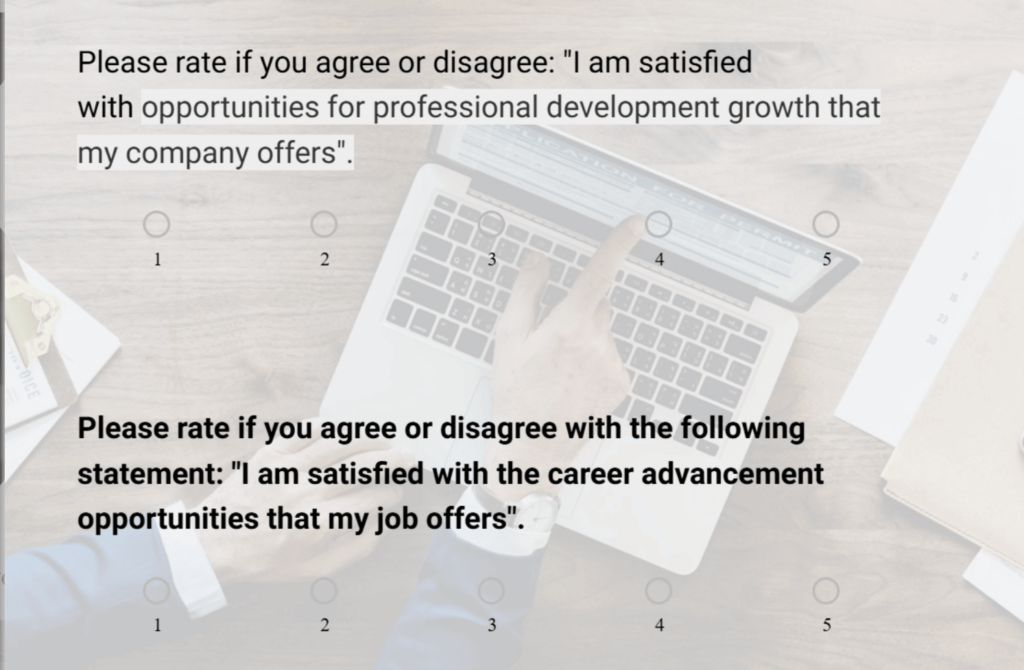
1. Likert Scales use a rating system (e.g., 1-5 or 1-7 points) and are best for tracking patterns over time and comparing results across teams. Example: “My manager follows through on commitments.” Here’s a quick Likert template example:
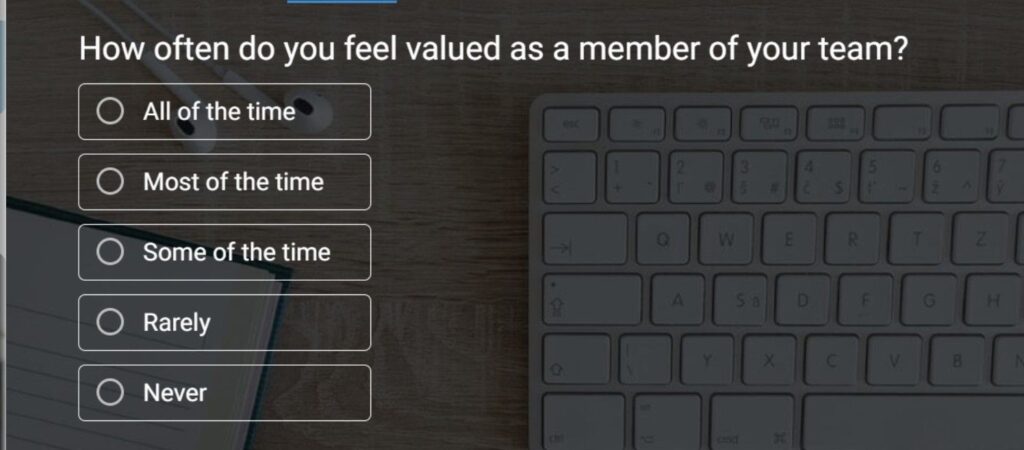
2. Frequency Scales work best when you want to know how often something actually happens, not whether it sounds good in theory. Example: “How often does your manager check in about workload or priorities?” Here’s a customizable frequency template you can use:
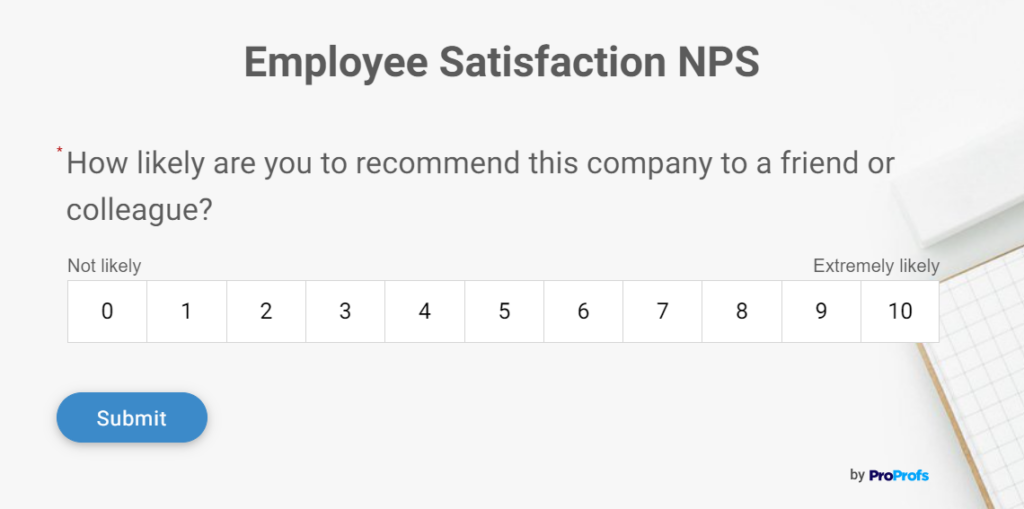
3. 0–10 Scoring is useful for dashboards and leadership reporting, especially in larger organizations. The most common example is an eNPS. Here’s a quick employee NPS template for you:
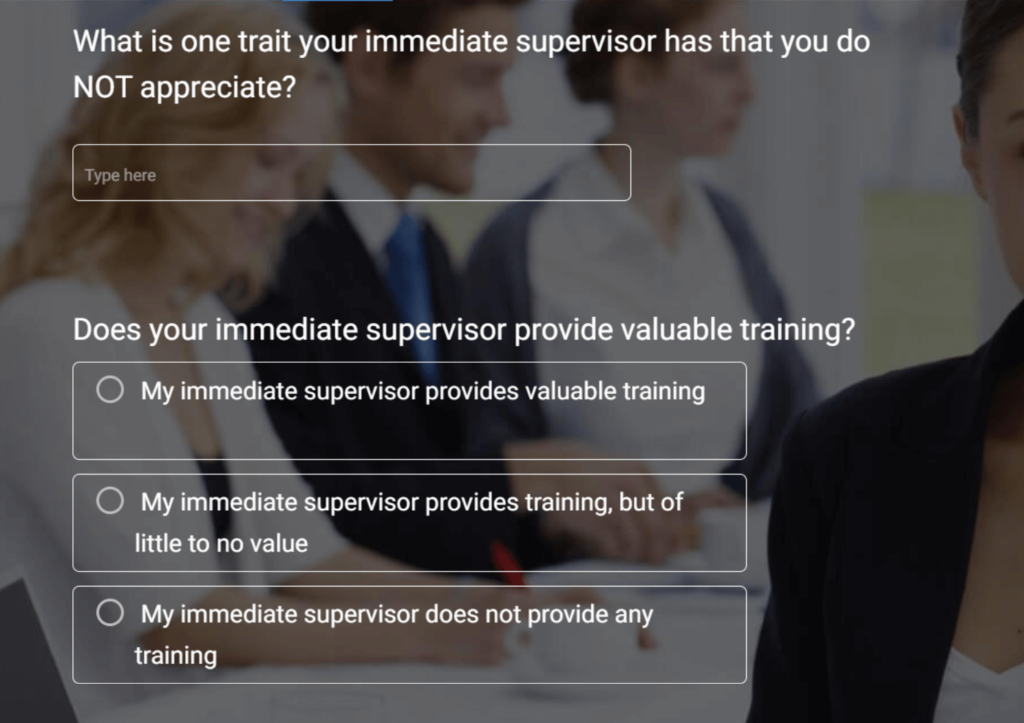
4. Open-Text Prompts add context, but only when used sparingly. Example: “What is one change your manager could make that would most improve your day-to-day work?” Here’s a template with open-text prompts:
How to Run a Management Survey Without Survey Fatigue
Most teams do not fail at management surveys because they ask the wrong questions. They fail because they ask too many, ask them too often, or frame them in a way that puts managers on edge.
A few small choices here make a big difference in how the survey is received and whether anyone takes it seriously.
| What To Do | Why It Matters |
|---|---|
| Keep the Survey Short and Focused | Choose one clear goal and build the survey around it. Ten to fifteen strong questions get better responses than long surveys that feel exhausting. |
| Set Expectations Before You Send the Survey | Explain why you are running the survey, what will happen after it closes, and what changes are realistic. Clear expectations reduce cynicism. |
| Frame Questions Around Systems, Not People | Personal judgment triggers defensiveness. System-focused questions lead to more honest answers and more usable feedback. |
| Time It When People Can Think | Sending surveys during high-stress periods leads to rushed or skipped responses. Timing affects data quality more than most teams expect. |
| Prepare Managers Before Sharing Results | When managers know the goal is improvement, not blame, they are more open to feedback and more likely to act on it. |
Quick Decision Guide: Pick the Right Question Set by Goal & Company Size
Before you write a single question, you need to answer one thing honestly: what are you actually trying to fix?
Most management surveys fail because they try to measure everything at once. That is how you end up with long surveys, low response rates, and results that nobody knows how to act on. A better approach is to start with a clear goal and choose questions that match both that goal and the size of your company.
Use this as a practical starting point.
1. If Your Goal Is to Build Trust and Psychological Safety
Best For: New managers, recently restructured teams, low engagement signals
Company Size Tip: Extra caution in teams under 10 people
Focus on employee survey questions about management that examine systems and behaviors, not personalities. Ask whether expectations are clear, feedback feels safe, and concerns are handled fairly. Avoid anything that sounds like a character judgment of the manager. In small teams, skip demographic filters entirely to reduce the fear of being identified.
2. If Your Goal Is to Improve Manager Effectiveness
Best For: Scaling teams, fast growth, new leadership layers
Company Size Tip: Works well in mid-sized and large organizations
Choose employee survey questions about management that look at decision-making, prioritization, delegation, and clarity. These are “controllables” that managers can actually improve. Avoid broad questions about company strategy or compensation unless leadership is ready to act on them.
3. If Your Goal Is to Reduce Turnover Risk
Best For: High attrition, quiet quitting, declining morale
Company Size Tip: Combine survey data with follow-up actions
Ask about support, workload, growth conversations, and fairness. Employees often leave because of day-to-day management issues, not big company policies. Make it clear upfront which areas you can and cannot change, so expectations stay realistic.
4. If Your Goal Is to Fix Communication Breakdowns
Best For: Remote teams, cross-functional work, rapid change
Company Size Tip: Use simple rating scales for clarity
Focus on clarity of direction, feedback quality, and information flow. Keep employee survey questions about management specific and time-bound. Vague communication questions usually produce vague answers.
5. If Your Goal Is to Support Frontline or Global Teams
Best For: Distributed workforces, shared devices, limited access
Company Size Tip: Keep employee survey questions about management short and easy to complete
Prioritize simple language, short questions, and clear response options. Accessibility matters more here than perfect phrasing. The goal is to hear from people who are usually left out of surveys.
If you are unsure where to start, pick one primary goal and design the survey around that. You can always run another survey later. Trying to cover everything in one go is the fastest way to get shallow data and tired respondents.
How to Analyze Results Without Fooling Yourself: Question-Level Insights, Segmentation, and Trends
Survey results can look clean and reassuring while still hiding real problems. The goal is not to chase high scores. It is to understand patterns, gaps, and changes over time.
Start at the question level. Overall averages hide too much. Look at how responses are distributed and where scores cluster in the middle. A wall of “neutral” answers often signals fear or confusion, not satisfaction.
Be careful with segmentation. Slice the data only when groups are large enough to protect anonymity. Over-segmentation makes people cautious in future surveys and reduces honesty. When in doubt, zoom out.
Trends matter more than snapshots. One survey tells you what people felt at a moment in time. Repeated surveys show whether things are improving, stuck, or quietly getting worse.
Finally, read open-text responses for themes, not individual complaints. Patterns are where action lives.
FREE. All Features. FOREVER!
Try our Forever FREE account with all premium features!
What to Do After the Survey: Turn Feedback Into Action Employees Can See
This is the moment that decides whether your next survey gets honest answers or polite silence.
- Share a short summary of what you heard, without sugarcoating it.
- Choose a small number of priorities you will act on, and say them clearly.
- Say what you will not change right now, and explain why.
- Equip managers to focus on “controllables” that they can improve fast.
- Make a few visible changes within weeks, not quarters.
- Close the loop by showing employees what changed because of their feedback.
Common Challenges With Employee Survey Questions About Management
Running employee survey questions about management is rarely as straightforward as it sounds. Even well-meaning surveys can backfire when trust is low, expectations are unclear, or follow-up is weak. The table below highlights the most common challenges teams run into and what helps prevent them.
| Challenge | Why It Happens | What Helps |
|---|---|---|
| Fear of Retaliation | Employees worry that honest feedback can be traced back to them, especially in small teams. | Design for anonymity, limit segmentation, and be explicit about how results will be used. |
| Identity “Triangulation” | Demographic filters like role, tenure, or location make anonymity feel fragile. | Avoid over-segmentation until response volume is high enough to protect privacy. |
| Survey Fatigue | Long or frequent surveys make employees disengage or rush answers. | Keep surveys short, focused, and tied to one clear goal. |
| Low Response Rates | Employees doubt anything will change, so they opt out. | Share results quickly and show visible follow-up actions. |
| Manager Defensiveness | Feedback feels like judgment rather than support. | Frame questions around systems and behaviors that managers can control. |
| The Action Gap | Teams ask for feedback but fail to act on it. | Be clear about what will change, what will not, and why. |
Conclusion: A Simple Plan You Can Run This Week
If there is one thing to take away from this guide, it is this: employee survey questions about management only work when people trust the process behind them.
Start small. Pick one clear goal, choose the question set that supports it, and keep the survey short. Be upfront about anonymity, realistic about what will change, and disciplined about what you ask. When the survey closes, share what you learned and act on a few visible improvements quickly.
If you want the process to be painless, use a tool that makes it easy to build surveys fast, control anonymity settings, share a simple link across teams, and review question-level reports without getting lost in spreadsheets. ProProfs Survey Maker is built for exactly that, especially when you need responses from both office teams and frontline staff.
That is how you turn feedback into progress, not just data.
FREE. All Features. FOREVER!
Try our Forever FREE account with all premium features!

 We'd love your feedback!
What did you like & how can we make it even better?

 Thanks for your feedback!
 Ask Your Question
Have a question? Get expert help to make your decision easier.