

Employee engagement software may seem straightforward at first glance. Send a survey, collect feedback, build a dashboard, and done. But if you’ve ever rolled this out in a real business, with skeptical teams, limited time, and leaders asking “now what?”, you know how quickly it breaks down.
Low response rates. Vague comments. Zero follow-through.
I’ve dealt with this in fast-growing teams where every hire matters and churn is expensive. The tool is rarely the real problem. Rollout mistakes, weak follow-up, and no clear ownership for action are what kill momentum.
That’s why this guide exists. It’s a practical breakdown of 10 employee engagement tools that hold up in real-world use, what each one is good at, where it struggles, and when it actually makes sense to use it.
If you’re done checking the “we ran a survey” box and want engagement efforts that actually move the business, this is where you start.
What Is Employee Engagement Software?
Employee engagement software helps you listen at scale and act with precision. At its core, it collects structured feedback from employees and turns it into signals leaders can actually use.
That usually starts with surveys. Pulse checks, eNPS surveys, lifecycle surveys, and manager feedback. But good tools do not stop at collection. They help you spot patterns, assign ownership, and track follow-through so feedback does not die in a spreadsheet.
If you have only used basic forms, you will notice the difference immediately. Engagement software is built for repeatability and accountability. You can run the same survey quarterly, compare results over time, segment by team or role, and identify areas where improvements are being made or where progress is slipping.
What It Is Not
Employee engagement software is not a morale booster. It will not fix weak managers or a broken culture on its own. If there is no plan to act on the results, even the best platform will fail.
Think of it as infrastructure. It gives you clean data, guardrails, and visibility. What you do with that data is what drives results.
What Good Engagement Software Actually Solves
If the tool is doing its job, it should help you:
- Get honest feedback without burning trust.
- Reach everyone, including deskless or distributed teams.
- Spot issues early, before they turn into attrition.
- Hold managers accountable for action, not just awareness.
- Prove impact over time, not just run one-off surveys.
Now, let’s begin with the employee engagement software.
10 Best Employee Engagement Software Reviewed
Here’s a quick table to help you shortlist fast. Do not overanalyze it. Scan for fit, then go deeper in the listicle. If a tool does not match your org size, workflow, or engagement goal, you can simply skip it. There is no perfect platform, only the right one for the job.
| Tool | Best For | Key Features | Pricing | User Rating |
|---|---|---|---|---|
| ProProfs Survey Maker | Scalable, enterprise-grade engagement surveys | AI Questionnaire Builder, 100+ templates, advanced reporting, skip logic, custom branding, SSO/GDPR | Free plan; Paid from $19.99/month | 4.8/5 (Capterra) |
| PeopleGoal | Performance-driven engagement | Goals & OKRs, pulse surveys, one-on-ones, continuous feedback | Paid from $4/user/month (billed annually) | 4.5/5 (G2/Capterra) |
| Bonusly | Recognition-driven engagement | Peer recognition, redeemable rewards, dashboards, performance insights | Paid from $3/seat/month | 4.7/5 (G2) |
| Workvivo | Culture and internal communication | Activity feed, livestreams, polls, surveys, intranet, news & comms | Custom pricing; Demo required | 4.7/5 (Capterra) |
| Vantage Circle | Rewards, recognition & benefits | Recognition, corporate wellness, feedback forms, analytics | Custom pricing; Demo required | 4.7/5 (G2) |
| Leapsome | Feedback + development + engagement | Pulse surveys, reviews, learning paths, analytics | Custom pricing; Demo required | 4.6/5 (Capterra) |
| Motivosity | Peer recognition and community engagement | Social feed, points & rewards, survey feedback, analytics | Custom pricing; Demo required | 4.7/5 (G2) |
| Culture Amp | Analytics and benchmarking | Research-backed survey design, industry benchmarks, dashboards | Custom pricing; Demo required | 4.5/5 (G2) |
| Qualtrics Employee Experience | Enterprise EX programs and deep analytics | Advanced analytics, segmentation, multi-channel data, action planning | Custom pricing; Demo required | 4.4/5 (G2) |
Let’s move on to the elaborate breakdown of each tool.
Every tool below is reviewed the same way I evaluate software in real teams: What problem it solves best, where it breaks down, and when it actually makes sense to use.
1. ProProfs Survey Maker
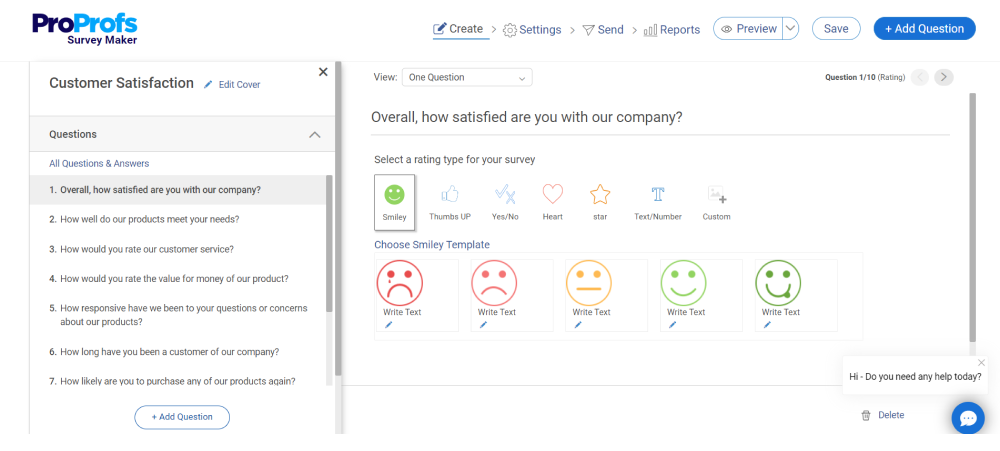
ProProfs Survey Maker is one of the few engagement tools I’ve stuck with through multiple real deployments, because it scales without the usual surprises. You can go from a quick pulse to a full enterprise survey with no quota headaches, no hidden costs, and no begging your account rep for more capacity.
The AI Questionnaire Builder is an actual time saver. Give it a prompt like “create a quarterly engagement pulse with follow-ups for low scores,” and it returns a deployable survey with branching logic in seconds.
Best For: Large teams and enterprises that need scalable surveys, clear analytics, and low rollout friction.
Pros:
- AI-powered survey creation using the Questionnaire Builder.
- 100+ professional templates for engagement, pulse, eNPS, and lifecycle surveys.
- Full branding and customization, including white-label options.
- 20+ question types, including NPS, ranking, and sliders.
- Advanced logic features like skip logic, branching, and scored surveys.
Cons:
- No dark interface for late-night survey building.
- Full onboarding support is limited to paid plans.
Pricing: Free plan available with core features. Paid starts at $19.99/month, followed by Business at $49.99/month, and Enterprise at $149.99/month.
User Rating: 4.8/5 (Capterra)
2. PeopleGoal
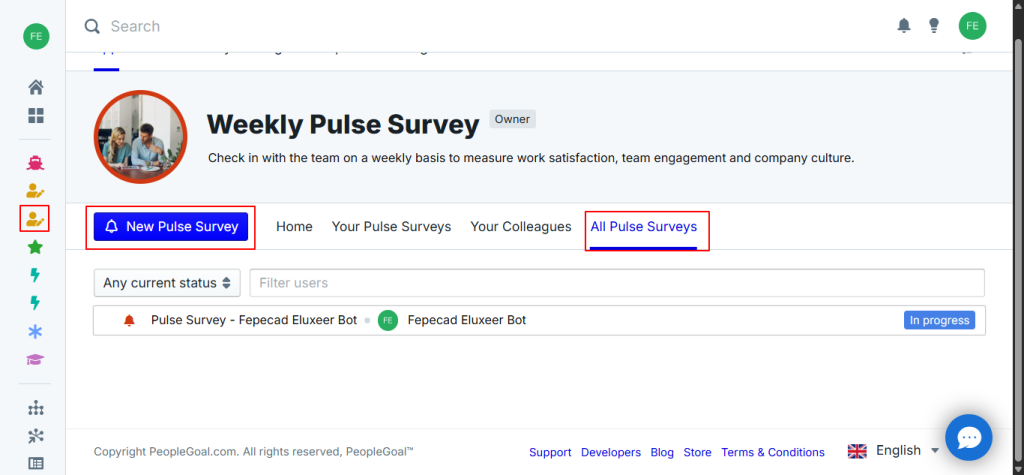
I used PeopleGoal at a time when engagement wasn’t the real problem. Lack of clarity was. People didn’t know what they were working toward, check-ins were inconsistent, and feedback felt reactive instead of planned. Surveys alone weren’t going to fix that.
Goals, check-ins, and feedback all lived in one place, so engagement wasn’t something we measured separately. It showed up naturally in one-on-ones and goal reviews. The pulse surveys were useful, but more as a temperature check than a diagnostic tool. The real value came from making managers slow down, set goals properly, and follow through.
Best For: Teams that want to improve engagement by strengthening goal clarity, ongoing feedback, and manager-led performance conversations.
Pros:
- Clear goal-setting aligned with company objectives and OKRs.
- Pulse surveys that support regular check-ins.
- One-on-one meeting tracking and feedback documentation.
- Encourages consistent manager follow-through.
- Easy for managers to adopt without heavy training.
Cons:
- No downloadable or on-premise version.
- The dark user interface option is not available.
User Rating: 4.5/5 (G2/Capterra)
Pricing: A free trial is available. Paid plans start at $4 per user per month.
3. Lattice
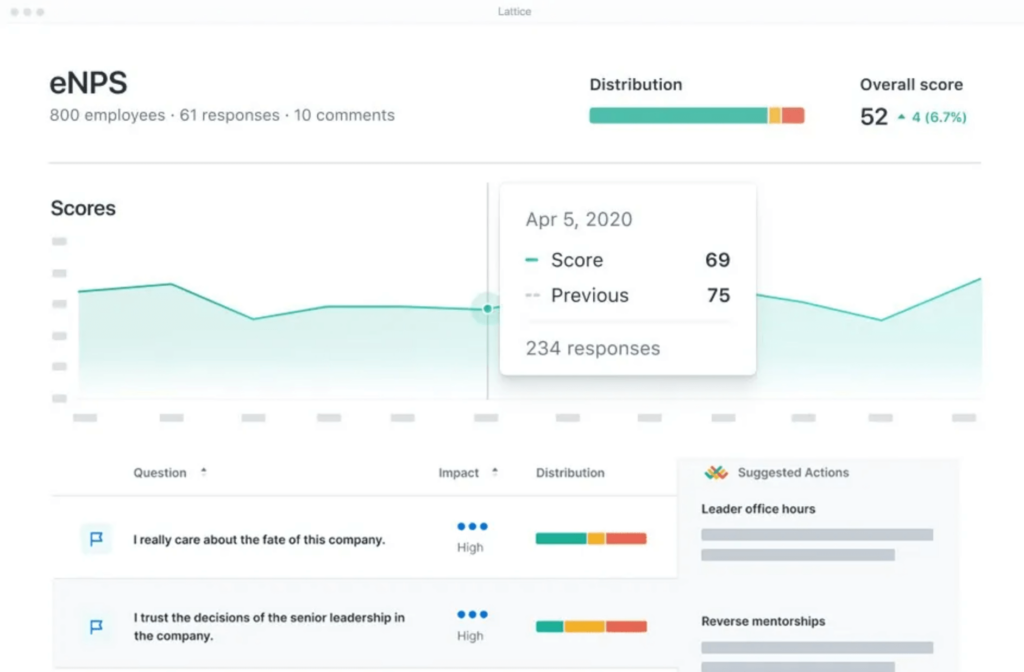
Lattice is the tool I have heard people reaching for when engagement needs to be tied directly to performance and manager behavior. If surveys in your organization tend to end with “interesting results” and no real change, Lattice forces a different outcome. Engagement data does not live in isolation here. It feeds straight into goals, reviews, and ongoing feedback cycles.
Pulse surveys and eNPS are easy to run, but the real value shows up in how Lattice nudges managers to follow up. It makes engagement part of the operating rhythm, not a quarterly event.
Best For: Mid-market and enterprise teams that want performance-linked engagement with strong manager accountability.
Pros:
- Pulse surveys and eNPS are built into ongoing performance workflows.
- Goals and OKRs that connect engagement insights to business outcomes.
- Continuous feedback and review cycles that reinforce follow-through.
- Manager dashboards that surface issues and track action over time.
- Strong integration ecosystem with HR systems, calendars, and collaboration tools.
Cons:
- Setup requires upfront planning and internal alignment.
- It can feel heavy if you only need basic engagement surveys.
- Pricing is seat-based and adds up quickly at scale.
Pricing: Paid plans start at $11/seat/month.
User Rating: 4.7/5 (G2)
4. Bonusly
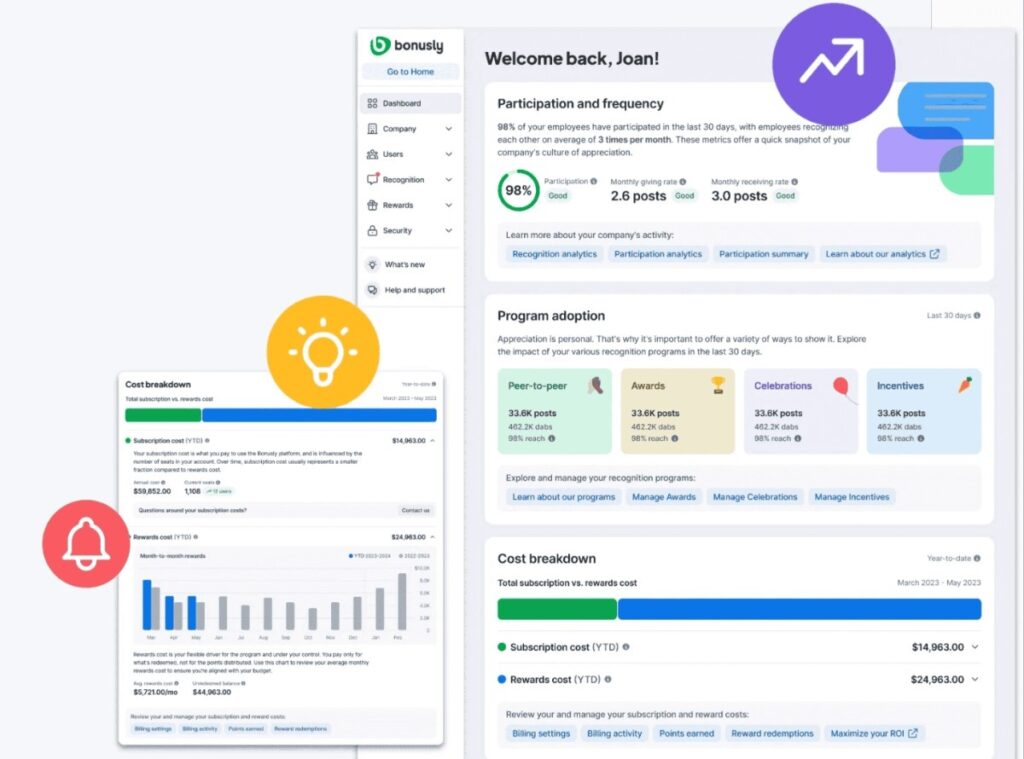
I usually hear about Bonusly when teams already have some engagement structure in place, but feel like day-to-day appreciation is missing. Surveys might surface issues once a quarter, but there’s nothing reinforcing good work in real time. Bonusly is brought in to solve that gap, not to diagnose deeper engagement problems.
It works because it fits naturally into existing workflows. Recognition happens where work already happens, which is why adoption is typically high without much change management. That said, it’s not a substitute for structured feedback or analytics-heavy engagement programs.
Best For: Teams that want to drive engagement through consistent, visible recognition rather than surveys.
Pros:
- Peer-to-peer recognition with redeemable rewards.
- High adoption due to Slack, Teams, and email integrations.
- Dashboards that show recognition activity and trends.
- Reinforces company values through tagged recognitions.
- Simple rollout with minimal setup.
Cons:
- Reward budgets need ongoing oversight as teams scale.
- Limited diagnostic insight compared to survey-based tools.
- Not ideal if recognition is already strong culturally.
Pricing: Paid plans start at $3 per seat per month.
User Rating: 4.7/5 (G2)
5. Workvivo
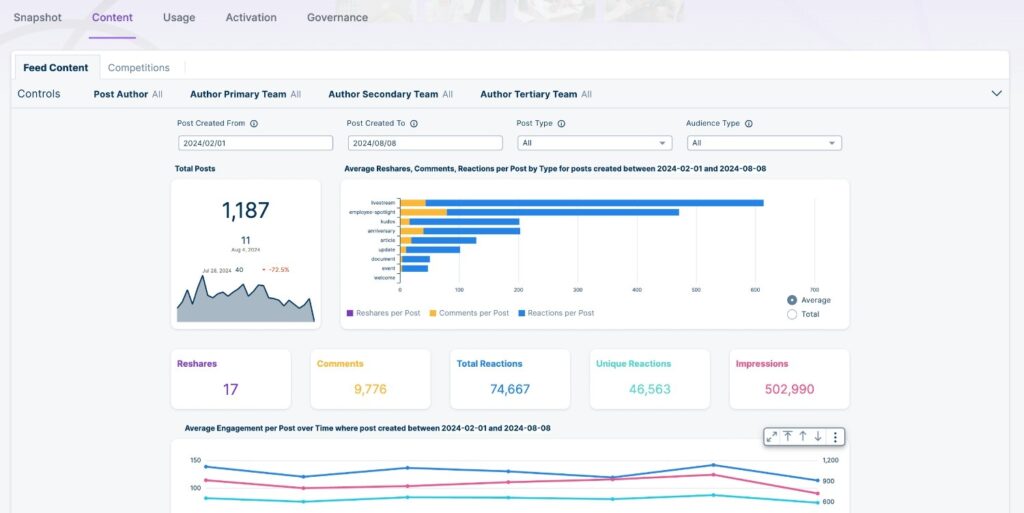
I’ve usually heard about Workvivo when teams realize their engagement problem is really a communication problem. The employee engagement software shows up in those conversations because it acts as a central layer for culture and communication.
Instead of engagement being a quarterly activity, it becomes part of how updates, recognition, and conversations flow day to day. Teams use it to replace scattered emails, underused intranets, and one-way announcements with something more interactive.
Best For: Large organizations that need to strengthen culture, internal communication, and visibility across distributed teams.
Pros:
- Central activity feed for company updates, posts, and engagement.
- Built-in polls and surveys alongside everyday communication.
- Livestreams and content tools that increase leadership visibility.
- Intranet-style access to resources, news, and policies.
- Strong adoption in distributed or frontline-heavy environments.
Cons:
- Overkill if surveys are your primary engagement need.
- Requires ongoing content ownership to stay effective.
- Custom pricing slows down early evaluation.
Pricing: Custom pricing. Demo required.
User Rating: 4.7/5 (Capterra)
6. Vantage Circle
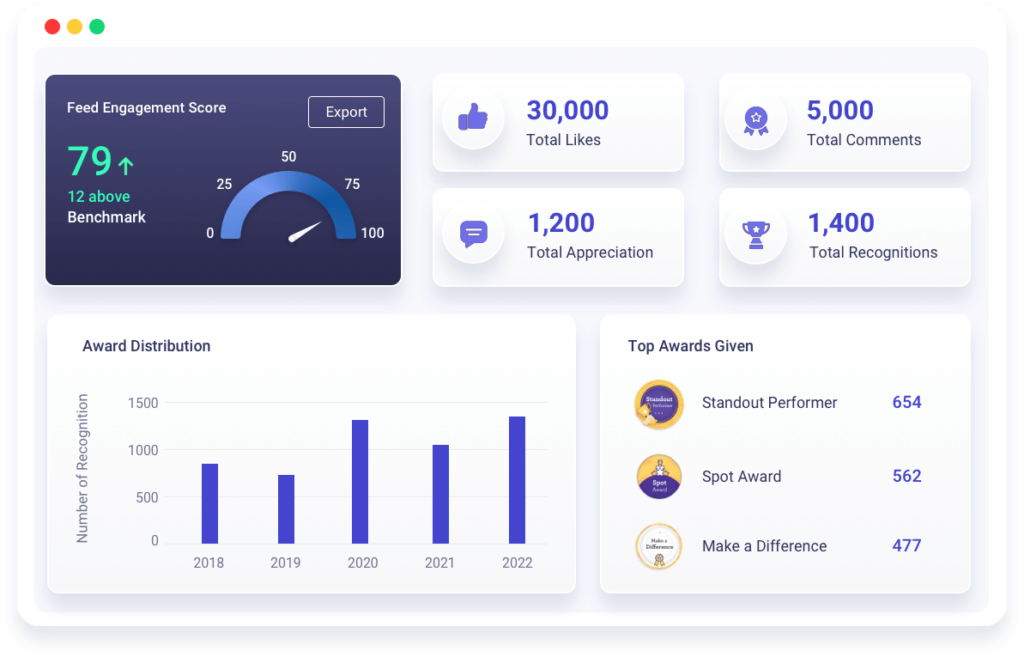
I usually hear about Vantage Circle when engagement conversations shift from “how do we listen” to “how do we reinforce behavior.” Teams looking at it are often already running surveys elsewhere, but they want a stronger system around rewards, benefits, and everyday motivation, especially at scale.
Where teams need to be careful is the clarity of intent. Vantage Circle works best when recognition and benefits are the core engagement levers. If your priority is deep diagnostics or manager-led action planning, you’ll likely need to pair it with a survey-focused tool.
Best For: Mid to large organizations that want to drive engagement through rewards, recognition, and benefits programs.
Pros:
- Centralized recognition and rewards platform.
- Corporate wellness and employee benefits are built in.
- Feedback forms and basic analytics for engagement signals.
- Works well for large, geographically distributed teams.
- Reduces vendor sprawl for rewards and perks.
Cons:
- Reporting depth varies depending on the modules used.
- Less suited for advanced engagement diagnostics.
- Custom pricing slows early-stage comparison.
Pricing: Custom pricing. Demo required.
User Rating: 4.7/5 (G2)
7. Leapsome
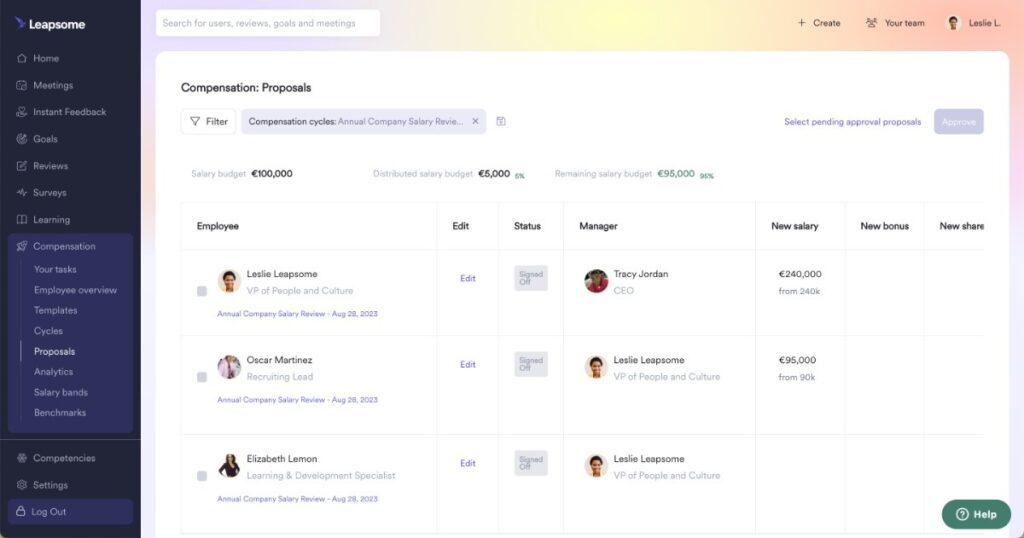
Leapsome usually comes up when teams want engagement to connect more tightly with development and growth, not just sentiment. I’ve seen it considered by companies that already run performance reviews, but feel those reviews are disconnected from how people actually feel at work.
What draws people to Leapsome is that engagement surveys sit alongside reviews, learning paths, and feedback. The idea is simple: if engagement scores dip, managers should have tools nearby to address skills gaps, growth conversations, or development plans. Where teams need to be realistic is in customization.
Best For: Teams that want to combine engagement, performance reviews, and employee development in one system.
Pros:
- Pulse surveys and engagement feedback are built into review cycles.
- Learning paths tied to performance and growth conversations.
- Clean analytics for tracking engagement trends over time.
- Supports continuous feedback between managers and teams.
- Works well for scaling teams that want structure.
Cons:
- Customization options can feel limited for complex programs.
- Requires alignment between HR, managers, and leadership to work well.
- Pricing is sales-led, which slows quick evaluation.
User Rating: 4.6/5 (Capterra)
Pricing: Custom pricing. Demo required.
8. Motivosity
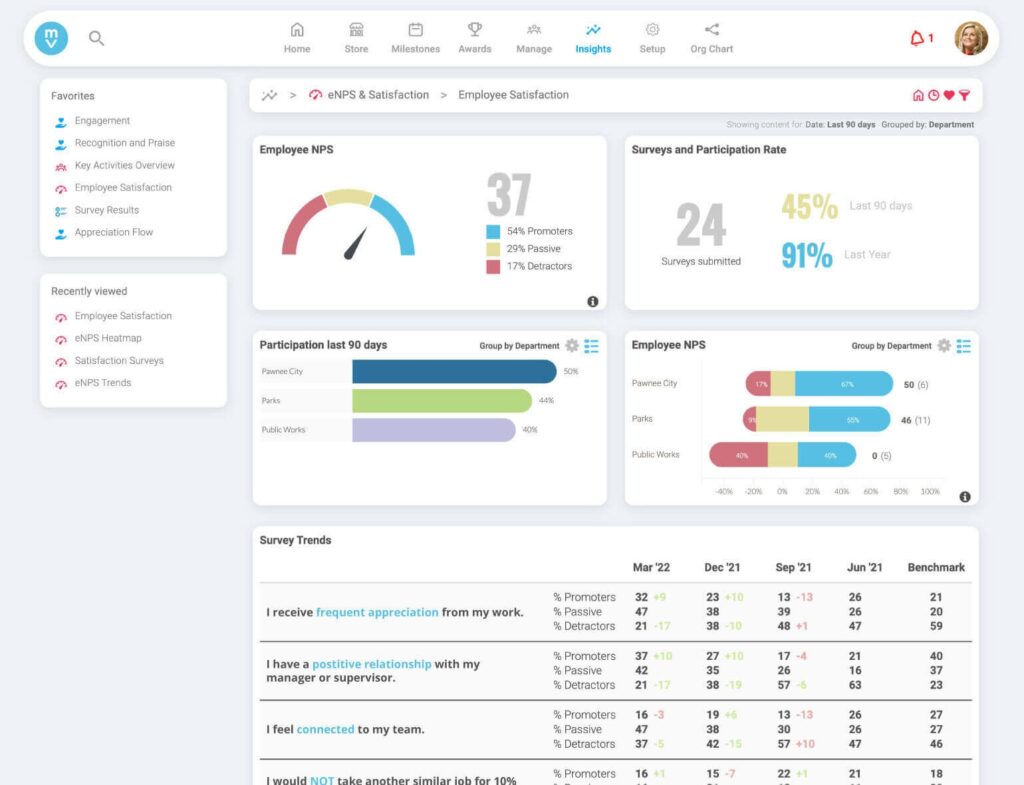
I’ve mostly heard about Motivosity from people who were trying to fix a slow fade in team energy. Not a crisis, not terrible engagement scores, just that feeling where people stop celebrating wins and work starts to feel transactional. Motivosity tends to arise when leaders want to rebuild connection and appreciation, rather than run another diagnostic.
What teams like about it is the social layer. Recognition is public, frequent, and easy to participate in. Where teams need to be clear-eyed is intent. Motivosity works best once you already understand your engagement issues. It helps reinforce good behavior. It does not help you discover what’s broken.
Best For: Teams that want to strengthen peer recognition and community-driven engagement.
Pros:
- Peer recognition with points and redeemable rewards.
- Social feed that keeps appreciation visible and ongoing.
- Simple surveys for lightweight engagement feedback.
- Analytics to track participation and recognition trends.
- Easy to roll out across teams without heavy setup.
Cons:
- Limited depth for engagement diagnostics.
- Mobile app reliability has been inconsistent.
- Not ideal as a standalone engagement measurement tool.
Pricing: Custom pricing. Demo required.
User Rating: 4.7/5 (G2)
9. Culture Amp
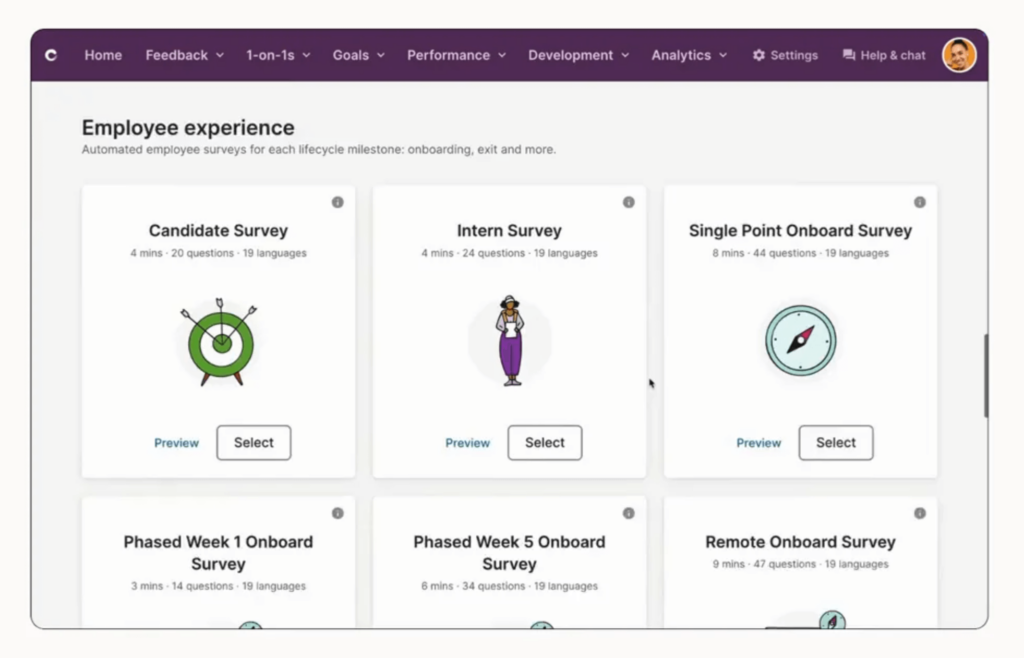
Culture Amp is one of those tools I’ve mostly heard about from friends in HR who needed credibility and benchmarking, not just internal data. Usually, the situation is the same: leadership wants to know whether an engagement score is actually good or just “good for us.” Culture Amp exists for that question.
Its strength is research-backed surveys and industry benchmarks. Where Culture Amp can feel heavy is speed. It’s not designed for quick, scrappy pilots or constant iteration. It works best when engagement is treated as a structured, recurring program with buy-in from the top.
Best For: Organizations that prioritize analytics, benchmarking, and research-backed engagement programs.
Pros:
- Research-backed survey design and validated questions.
- Strong industry and peer benchmarking.
- Advanced analytics to identify engagement drivers.
- Structured approach to action planning.
- Trusted by larger organizations with mature HR functions.
Cons:
- No free plan or self-serve trial.
- Setup and analysis take time.
- Less flexible for ad-hoc or lightweight surveys.
Pricing: Custom pricing. Demo required.
User Rating: 4.5/5 (G2)
10. Qualtrics Employee Experience
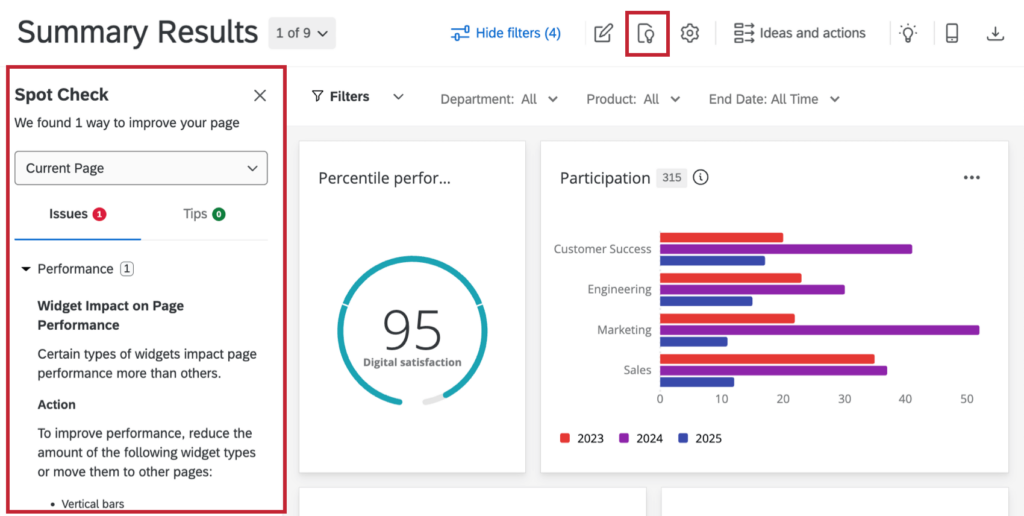
Qualtrics usually comes up when I talk to people who are running serious, enterprise-level experience programs. Often it’s someone in HR or People Analytics who already has leadership buy-in and needs a system that can handle complexity, scale, and scrutiny. This is not a lightweight tool you try on a whim. It’s brought in when engagement data needs to be presented to executives.
What I’ve heard consistently is that Qualtrics shines when engagement is part of a broader EX strategy. Surveys, lifecycle feedback, sentiment analysis, and action planning all live in one ecosystem. Where teams struggle is speed. Implementation takes time, and there’s a learning curve.
Best For: Large enterprises running complex employee experience programs that require deep analytics and structured action planning.
Pros:
- Advanced analytics and segmentation across the employee lifecycle.
- Multiple feedback channels, including surveys and digital touchpoints.
- Strong action planning and progress tracking.
- Built for scale and enterprise governance.
- Trusted in environments where data rigor matters.
Cons:
- Steep learning curve for new teams.
- Implementation and rollout take time.
- Expensive compared to lighter-weight tools.
Pricing: Custom pricing. Demo required.
User Rating: 4.4/5 (G2)
My Top 3 Picks (And Why)
This is where I stop comparing features and start talking about fit. These three tools come up repeatedly because they solve different engagement problems cleanly, without creating new ones.
I’m not ranking them “best to worst.” Each one wins in a specific scenario.
1. ProProfs Survey Maker
It’s best when you need reliable engagement surveys that scale without friction. I’ve seen ProProfs picked when teams are tired of tools that look good in demos but fall apart during rollout. If your engagement program relies on recurring surveys, clean data, and rapid setup, this one delivers.
The AI Questionnaire Builder matters more than it sounds. When you’re running quarterly pulses or rolling out surveys to large teams, saving hours on setup adds up fast. It also avoids the usual issues around response limits and surprise pricing. You can also go for the employee learning suite from ProProfs that offers all-in-one employee-related support.
Pick this if:
- Surveys are the backbone of your engagement program.
- You need to reach large or distributed teams reliably.
- You want something your team can run without constant vendor support.
Skip this if:
- Recognition or performance management is your primary engagement lever.
2. Lattice
It’s best when engagement needs to drive manager behavior and performance. Lattice makes sense when leadership wants engagement tied to outcomes, not just scores. I’ve seen it chosen when companies are done treating engagement as a side project and want it embedded into how managers run teams.
The strength here is connection. Engagement data feeds directly into goals, reviews, and feedback cycles. That makes follow-through visible, which is where most engagement efforts fail.
Pick this if:
- Managers need clearer accountability around engagement.
- You want feedback tied to performance and goals.
- You already run structured reviews and OKRs.
Skip this if:
- You only need simple pulse surveys or lightweight tools.
3. Bonusly
It’s best when recognition is the missing piece. Bonusly shows up when teams already understand their engagement issues but want to reinforce the right behaviors daily. It’s not about diagnosing problems. It’s about making appreciation visible and frequent.
I’ve seen adoption succeed because it fits naturally into existing workflows. Recognition doesn’t feel like “another HR initiative.” It feels like part of work.
Pick this if:
- Engagement issues stem from a lack of appreciation.
- You want fast adoption with minimal setup.
- Culture and morale are priorities.
Skip this if:
- You need deep engagement diagnostics or benchmarking.
How I Evaluated These Tools (And How You Should)
I didn’t look at feature lists in isolation. I looked at what breaks in real engagement programs and which tools help you avoid that. You can use the same filters:
1. Can You Get Honest Feedback Without Killing Trust?
If employees don’t trust the process, nothing else matters. I paid close attention to how tools handle anonymity, access, and response control.
What to check:
- Can responses be anonymous without inviting duplicates?
- Can you control access using employee IDs or secure links?
- Does the tool feel safe to use on shared devices?
If this is shaky, engagement scores will be noise.
2. Does It Help You Act, Not Just Measure?
Most tools collect data well, but fewer help you do something with it.
Look for:
- Built-in action planning or follow-up workflows.
- Clear visibility for managers, not just HR.
- Signals that push accountability, not passive dashboards.
If results don’t translate into actions, the tool is just a reporting layer.
3. Will It Actually Get Used?
Adoption is the quiet killer of engagement programs. I’ve seen good tools fail because they asked people to change too much.
What matters here:
- Integrations with tools people already use.
- Simple access via links, not app downloads.
- Low friction for both employees and managers.
High adoption beats sophisticated features every time.
4. Can It Handle Scale Without Breaking?
Tools behave very differently when used by 50 people versus 50,000.
Look for:
- Support for bulk setup and recurring surveys.
- Reporting that doesn’t slow down at scale.
- Clear pricing that doesn’t spike as usage grows.
If you plan to grow, test for that now.
5. Is Pricing Transparent Enough to Pilot?
You should be able to test the value before committing long-term.
Look for tools that:
- Offer free plans or low-risk pilots.
- Are clear about per-seat or usage pricing.
- Don’t hide essential features behind surprise add-ons.
If it’s hard to evaluate early, it will be harder to justify later.
FREE. All Features. FOREVER!
Try our Forever FREE account with all premium features!
Measuring ROI From Employee Engagement
Most leaders do not want a long explanation. They want to know one thing: did this effort change anything that matters to the business. You do not need perfect attribution to answer that. You need a small set of signals that show movement over time and tie back to action.
What To Measure & Why
Response Rate: This tells you whether people trust the process and can access it easily. If participation is low, the program is broken before it starts.
Action Completion Rate: Track how many agreed actions were completed within 30 to 60 days. This is the clearest indicator that feedback is turning into behavior change.
Trend Movement: Look at engagement or eNPS trends across two or three cycles. One survey is noise. Patterns are signals.
Leading Business Indicators: Pair engagement data with metrics leadership already cares about: regretted attrition, absenteeism, internal mobility, or manager effectiveness scores.
How To Report It Up
Keep reporting simple. Show the score. Show the action taken. Show what changed next cycle. That is usually enough to keep executive support.
Common Implementation Issues (What Usually Breaks)
Most engagement initiatives fail in predictable ways. Not because teams chose the wrong tool, but because execution broke down after launch. The table below highlights the issues I encounter most frequently and guides how to avoid them.
| Issue | What Actually Happens | How To Prevent It |
|---|---|---|
| Low Response Rates | Employees worry about anonymity or ignore the survey | Use clear anonymity rules, short surveys, and simple access links |
| Feedback Goes Nowhere | Results are shared, but no actions are assigned | Decide ownership and deadlines before launch |
| Managers Ignore Results | Data stays with HR and never reaches teams | Give managers direct access and clear expectations |
| Too Many Surveys | Teams feel surveyed but not heard | Reduce frequency, increase action quality |
| Tool Complexity | Set up stalls or requires constant help | Start with one survey type and expand gradually |
| HRIS Sync Issues | Employee data becomes outdated or duplicated | Validate employee IDs and sync logic early |
| No Context For Scores | Leaders cannot interpret results | Use trends or benchmarks, not one-time scores |
| Adoption Drops Over Time | Engagement feels like a one-off initiative | Set a regular cadence and communicate outcomes |
Choosing The Right Tool Is Only Half The Work
Employee engagement software is not hard to buy. It’s hard to use well.
Most teams fail because they treat engagement as a task instead of a system. They run a survey, share a deck, and move on. The tools in this guide work when you use them with intent, clear ownership, and a repeatable rhythm.
If engagement is central to your strategy, start with clarity. Know what decision the data needs to support. Choose a tool that fits that goal, not one with the longest feature list. Keep the first rollout small, act on what you learn, and build from there. If surveys are your foundation, use a tool that makes structuring and deploying them easy and repeatable.
The teams that see results do one thing consistently. They listen, act, and close the loop. Do that well, and the software will finally earn its keep.
Frequently Asked Questions

What is EEM in WFM?
EEM stands for Employee Engagement Management within Workforce Management. It refers to measuring and improving engagement alongside operational data like scheduling, productivity, and performance. The goal is to connect how people feel at work with how effectively the workforce actually functions day to day.
What are the 5 R’s of engagement?
The 5 R’s are Recognition, Respect, Responsibility, Resources, and Results. They focus on reinforcing engagement through everyday experiences. When employees feel appreciated, trusted, supported, and accountable, engagement becomes sustainable rather than dependent on periodic surveys or programs.
How do you collect honest employee feedback at scale?
Honest feedback comes from balancing anonymity with control. Teams typically authenticate respondents using employee IDs or secure links while keeping responses anonymous in reports. This prevents duplicate submissions, builds trust, and works well for large organizations where scale and credibility matter.
How do you ensure engagement feedback leads to action?
Engagement feedback leads to action when ownership is decided before the survey launches. Assign responsibility, define follow-up expectations, and track completion. Without clear accountability, even the best data stalls. Action planning, not data collection, is what ultimately drives engagement outcomes.
FREE. All Features. FOREVER!
Try our Forever FREE account with all premium features!

 We'd love your feedback!
What did you like & how can we make it even better?

 Thanks for your feedback!
 Ask Your Question
Have a question? Get expert help to make your decision easier.