

You know that gut-punch feeling.
The customer says, “This looks great!” during the discovery call, but then quietly cancels two weeks later. Refund processed, problem “solved,” and boom, 1-star review anyway.
Support closes the ticket with a nice emoji, only for the same person to bounce back three more times with the exact same issue.
That’s not just “one of those days.” That’s your system leaking trust.
I’ve been there multiple times. Most satisfaction headaches don’t come from one-off disasters. They come from the same four quiet killers repeating on loop:
- Expectations that were never set clearly
- Different answers depending on who answers the chat/email/phone
- Way too much friction to actually get help
- A post-issue follow-up that feels like radio silence or a cold form letter
Closing those user-experience gaps is one of the quickest ways to see real progress in your numbers. Strong customer-focused slogans help, but actually addressing the pain points is what drives lasting results.
In this post, I’m sharing the playbook I wish someone had handed me earlier to improve customer satisfaction. Let’s get into it!
What Customer Satisfaction Really Means
Most people treat customer satisfaction like a score, a smiley face at the end of a ticket, or a quick “How did we do?” email that gets ignored. I look at it differently, because the score is not the thing that keeps customers around; it is just the symptom.
Customer satisfaction is what happens when your customer finishes an interaction and feels, “I can trust these folks again.” Trust is the real unit here, because when trust is high, customers stay longer, complain less, and give you a chance to fix the occasional mess-up. When trust is low, they often do not argue; they simply leave, and you only notice after the churn report lands.
This is why you can have “fast support” and still lose customers, because speed does not fix unclear expectations, and it does not fix inconsistency. It is also why you can process a refund and still get a 1-star review, because the refund solves the transaction, but a cold, silent, slow follow-up kills the relationship.
How to Measure Customer Satisfaction Without Lying to Yourself
If you measure customer satisfaction the wrong way, you end up with pretty charts and zero clarity, because you cannot tell what to fix first, what has improved, and what is still leaking trust.
Here’s the simplest way how to achieve customer satisfaction. You match the metric to the moment, you keep the questions short, and you tie every score to one operational number that explains what happened.
Step 1: Pick the Moments That Matter
Do not start by blasting surveys to your whole list. Start by choosing a few crucial moments where satisfaction is either won or lost.
Use this starter set:
- After a support interaction (ticket closed, chat ended, call completed)
- After onboarding (first success moment, setup completed, first order delivered)
- During high-friction workflows (cancellation, refund, returns, upgrades)
- After a failure (outage, bug, missed SLA, delayed delivery)
- During renewal or repeat purchase (relationship health check)
Once you pick moments, measurement becomes clean because you can connect the score to a specific experience.
Step 2: Use the Right Metric for the Right Job
1. Use CSAT to Grade a Specific Interaction
CSAT tells you, “How did that one experience go?” It is best when the customer has just finished a clear event, and you want a fast signal.
Best Use Cases
- Case closure
- Refund completed
- Onboarding handoff finished
- Billing or account-change request resolved
What to Ask
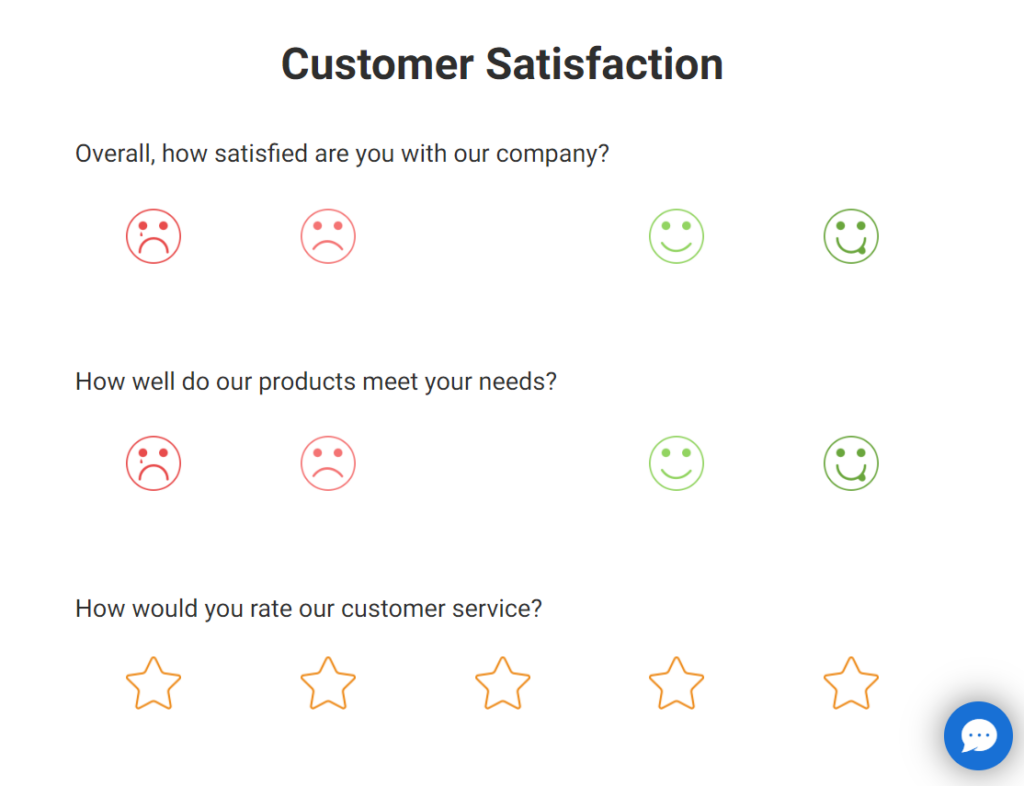
- “How satisfied were you with this experience?” (1 to 5)
- “What was the main reason for your rating?” (open text)
What to Track
- CSAT by touchpoint (support vs billing vs onboarding)
- Percent of low ratings (1 to 2), not only the average
- Top reasons behind low ratings (tag themes weekly)
What to Avoid
- With long CSAT surveys, people will ignore them or give you fake positives
- Asking CSAT days later, the signal decays fast
Here’s a quick CSAT survey template to help gauge customer satisfaction:
2. Use CES to Find Friction Before It Turns Into Churn
CES tells you, “How hard did you make this?” It is your best metric for workflows that quietly annoy people, even when support is polite.
Best Use Cases
- Cancellation and downgrade flows
- Refund and return processes
- Password reset, login issues
- Any “contact us” path
- Any step where customers drop off
What to Ask
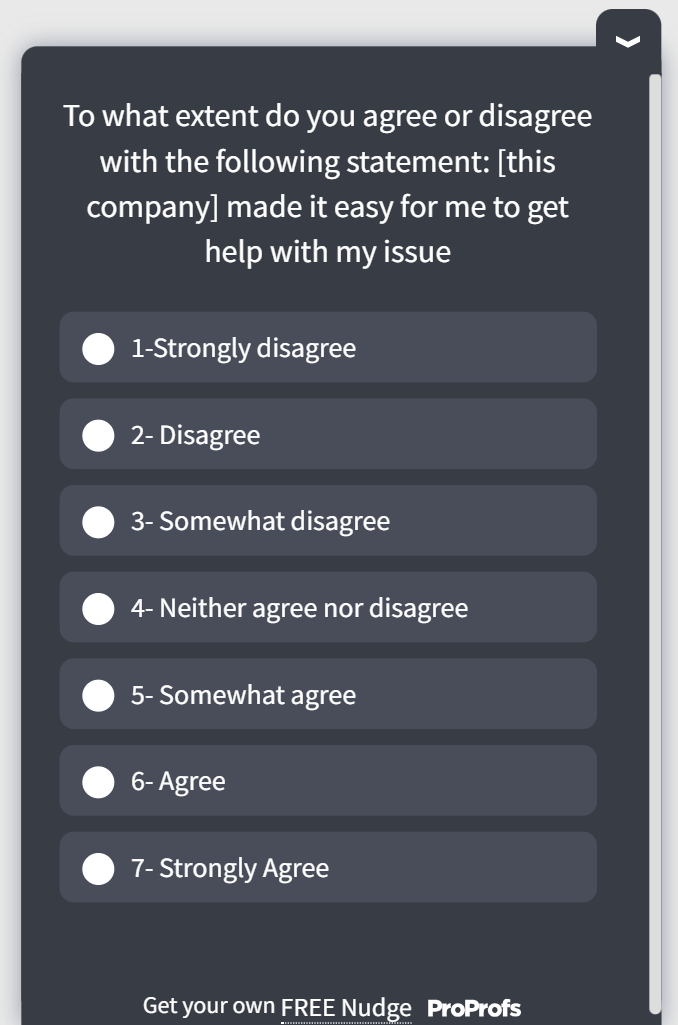
- “How easy was it to complete this?” (1 to 7, or very difficult to very easy)
- “What made it hard?” (optional open text)
What to Track
- CES by step or workflow (not just overall)
- Drop-off rate for the same step
- Repeat-contact rate for the same issue
What to Avoid
- Measuring CES on general relationship questions, it is built for effort moments
- Treating “easy” as success if customers still churn later, pair it with behavior
Here’s a microsurvey template for measuring CES:
3. Use NPS to Track Relationship Health Over Time
NPS is not a ticket-quality metric. It is a relationship trend. Use it to see how loyalty is moving, then slice it by segment so it becomes actionable.
Best Use Cases
- Monthly or quarterly pulse
- Health checks for different customer segments
- Measuring the impact of major product or service changes
What To Ask
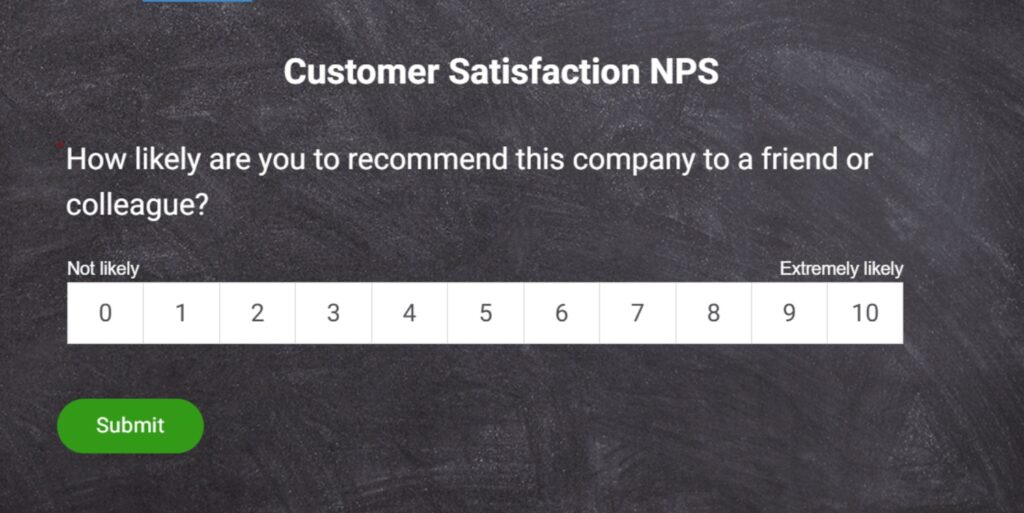
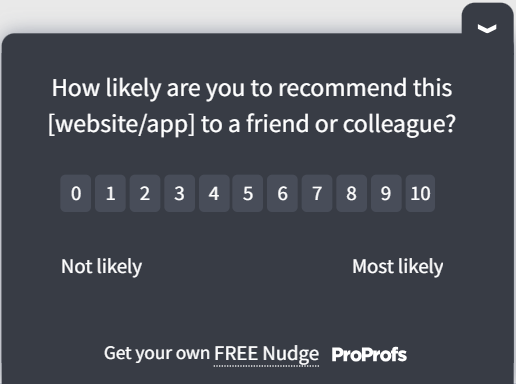
- “How likely are you to recommend us to a friend or colleague?” (0 to 10)
- “What is the main reason for your score?” (open text)
What to Track
- Detractor rate, not only the final score
- NPS by segment (new vs mature customers, high-value vs low-value, plan tier)
- Detractor churn risk over the next 30 to 60 days
What to Avoid
- Sending NPS after every ticket will annoy people and muddy the data
- Looking at one NPS number without segmentation, you will miss the real story
Here’s an email NPS survey template:
Step 3: Add Three Operational Metrics so Scores Become Fixable
Scores tell you what customers felt. Operational metrics tell you why they felt it, and what you can change next week.
Start with these three:
- First Response Time: how quickly you acknowledge the customer
- Time to Resolution: how long it takes to actually finish the job
- Repeat-Contact Rate: how often customers come back for the same issue
Here is the key connection you want to build:
- Low CSAT after support often maps to slow resolution or repeat contacts
- Low CES often maps to unnecessary steps, unclear UI, or policy confusion
- Dropping NPS often maps to repeated friction across the lifecycle, not one bad ticket
Run one NPS pulse only if you already have enough volume; otherwise, wait. Here’s a quick template for you:
- Log the three operational metrics weekly
If you want the cleanest implementation, set surveys to trigger right after the moment happens, like on case closure or after a workflow completion.
That is where tools like ProProfs Survey Maker fit naturally, because you can launch short surveys fast, target by journey stage, and see results without turning measurement into a project.
9 Strategies to Improve Customer Satisfaction
You already have enough ideas. What you need is a set of moves that hit different failure points, so you stop fixing the same problem in five different ways.
The ways to improve customer satisfaction below are built for execution; you will see where it fits in the lifecycle, what to do step by step, what to measure, and the mistakes that usually make it backfire.
1) Close the Expectations Gap
Why This Leaks Trust: Most satisfaction blowups start before support ever touches the ticket. Your customer thought they were buying one thing, then reality shows up with fine print, edge cases, and “technically that’s our policy.” That gap makes people feel tricked, and once they feel tricked, every future interaction gets judged harder.
What to Do: Fix it where it happens, not in a policy page nobody reads. Put the answer in the exact place where customers make the decision.
- Pick the top 3 surprise moments (trial end, refund timing, cancellation, delivery ETA).
- Rewrite the promise in plain language, one screen, no legal voice.
- Add a “What Happens Next” message before the moment hits, so customers are not learning it during a crisis.
- Make support macros match the same wording, so nobody freelances the truth.
What to Measure
- Policy-related ticket rate
- Cancellations tagged “not what I expected”
- CSAT on billing, cancellation, and refund touchpoints
- Repeat-contact rate on policy questions
What to Avoid: Do not “fix” this with longer documentation. More words rarely create more clarity. Also, do not update the website copy while leaving support scripts outdated; that is how inconsistency sneaks back in.
2. Make Answers Consistent Across Channels
Why This Leaks Trust: If chat says yes and email says no, you did not just create confusion; you created doubt. Customers stop believing anything you say, because they assume the outcome depends on who they get, not on what is fair.
What to Do: You need one truth, then you need it packaged for every channel.
- List your top 15 questions that create repeat contacts.
- Write one approved answer for each, including what is allowed, what is not, and what to do in edge cases.
- Turn those into channel-ready macros and a simple phone talk track.
- Define escalation rules so exceptions get handled consistently instead of being improvised under pressure.
What to Measure
- Channel-to-channel CSAT variance
- Transfer rate between teams
- Repeat-contact rate on the same issue
- First contact resolution rate
What to Avoid: Do not buy “omnichannel” tooling and assume the problem is solved. Omnichannel without standards just scales chaos faster.
3. Reduce Customer Effort in High-Friction Workflows
Why This Leaks Trust: Effort is the silent killer. Customers may not call you “bad,” they just feel tired dealing with you. When a simple task becomes a mini project, they start looking for an exit.
What to Do: Pick one workflow that causes disproportionate pain, then fix it like you mean it.
- Choose one friction workflow (cancellation, refund initiation, password reset, plan changes).
- Map every step a customer takes, then circle the steps that feel like paperwork.
- Remove steps, remove fields, remove decisions you can make automatically.
- Add a rescue option at the exact drop-off point, not on a generic contact page.
What to Measure
- CES for that workflow
- Drop-off rate at the friction step
- Ticket volume tagged to that workflow
- Time to completion for the workflow
What to Avoid: Do not “solve” friction with help docs. If customers need a guide to complete a basic workflow, the workflow is the bug.
4. Improve Speed and Quality Together
Why This Leaks Trust: Speed matters, but speed without resolution is just a fast way to disappoint someone. On the other side, a perfect answer that arrives two days late is still a bad experience.
What to Do: Separate routine issues from high-stakes issues, then design your routing around that reality.
- Define routine issues that can be handled quickly with structured replies.
- Define high-stakes issues where customers are anxious, angry, or at risk of churn.
- Set escalation triggers, like repeated contact, refund disputes, “cancel” language, or high-value accounts.
- Protect the human handoff, meaning customers know when a real person is taking over and by when.
What to Measure
- First response time
- Time to resolution
- Escalation rate
CSAT on escalated cases
What to Avoid: Do not hide behind automation. Customers can tell when you are deflecting them, and they will repay you with churn and reviews.
5. Collect Feedback at the Right Time
Why This Leaks Trust: Most feedback programs fail because they collect feedback when it is convenient for the company, not when it is meaningful for the customer. By the time you ask, the moment has passed, the details are gone, and the response rate is sad.
What to Do: Pick particular instances, trigger micro-surveys, and follow up fast when the score is low.
- Keep it to two questions: one score, one reason.
- Route low scores to a follow-up workflow within 24 hours, with a real owner.
- Review themes weekly, not quarterly.
What to Measure
- Response rate by touchpoint
- CSAT by lifecycle stage
- Time to close the loop on low scores
- Top themes from low-score reasons
What to Avoid: Do not launch long surveys “to get deeper insights.” You will get fewer responses and worse data, not better insights. Keep it short, then go deep only when needed.
6) Turn Feedback Into Fixes
Why This Leaks Trust: Customers notice when you ask for feedback and nothing changes. It feels performative, and it makes future feedback worse because people assume you will ignore it again.
What to Do: Build a tight loop: tag, pick drivers, assign owners, ship changes, report back.
- Tag feedback into 5 to 8 durable themes.
- Rank themes by frequency and severity, then pick the top 2 drivers for the next sprint.
- Assign an owner, set a ship date, and define “done.”
- Close the loop with customers when you fix something, especially detractors.
What to Measure
- Driver-level score movement for the top 2 themes
- Issue recurrence rate
- Percent of actions shipped on time
- Reduction in tickets tied to the driver
What to Avoid: Do not confuse a dashboard with progress. If nobody owns the driver, the dashboard is just decoration.
7. Run a Real Service Recovery Playbook
Why This Leaks Trust: A refund is not a recovery. A refund is a transaction reversal. Recovery is when your customer feels you took their time and frustration seriously.
What to Do: Create a simple playbook for failures, delays, refunds, and escalations, and make it easy for your team to execute.
- Acknowledge fast, using plain language.
- Explain what happened without hiding behind jargon.
- State what you are doing next, with timelines.
- Offer a fair goodwill gesture when the customer paid a real cost.
- Follow up after resolution with a human message, not a cold template.
What to Measure
- Follow-up CSAT after recovery
- Detractor recovery rate
- Review the rating trend after incidents
- Churn rate after refunds or escalations
What to Avoid: Do not send “We apologize for the inconvenience” and call it a day. That line is the corporate equivalent of a shrug.
8. Align Sales, Support, and Product
Why This Leaks Trust: When sales promises and support enforces, the customer experiences you as dishonest. Support becomes the bad guy, and the customer leaves feeling misled.
What to Do: Make promises operational, not aspirational.
- List the top 10 promises that later become tickets.
- Create approved language and red lines to define what can be promised and what cannot.
- Add a weekly loop where support shares the top misalignment examples with sales and product.
- Update scripts and pages based on what support sees, not what sounds good.
What to Measure
- Tickets tagged “not what I was told”
- Onboarding CSAT
- Churn reasons tagged “expectations mismatch”
- Escalations coming from sales-created edge cases
What to Avoid: Do not turn this into a blame game. Make it a shared standard and a shared scoreboard.
9. Build the Internal Engine
Why This Leaks Trust: Internal friction shows up as customer friction. Slow handoffs, unclear ownership, and burned-out teams create delays and inconsistencies that customers feel immediately.
What to Do: Treat internal service like a product.
- Run internal service ratings between departments on a set cadence.
- Define internal SLAs for handoffs that block customers, like billing disputes, access issues, or urgent fixes.
- Review misses weekly and fix the process, not the person.
- Protect the team with clear escalation paths and boundaries, because morale is operational, not motivational.
What to Measure
- Internal CSAT or eNPS trend
- Internal SLA adherence
- External CSAT correlation by team
- Backlog age for internal handoffs
What to Avoid: Do not paper over internal chaos with “customer first” slogans. Customers do not experience slogans; they experience handoffs.
30-Day Action Plan to Improve Customer Satisfaction
This plan is built to force action. You will choose three priorities, ship fixes every week, and review the same scoreboard on the same day, so customer satisfaction improves because your operating rhythm improves.
| Week | Focus | Deliverables | Owners | Review |
|---|---|---|---|---|
| Week 1 | Set The Scoreboard, Pick Priorities | - Pick the measurement moments - Stand up the scoreboard - Create 5 to 8 feedback tags - Choose Top 3 priorities (Frequency, Severity, Fixability) - Assign 1 owner per priority |
- CX or Support Ops - Support Lead - Product or Ops Lead - Billing or Finance Lead |
- Satisfaction scores at those 3 moments - How fast you respond - How fast can you solve - How often do customers come back for the same issue |
| Week 2 | Fix Problem 1 | - Ship Fix 1 - Log “done definition.” - Run weekly review, end with decisions, and next shipment |
- Priority owner (Fix 1) - CX or Support Ops - Support Lead |
- Did scores improve for that moment? - Did repeat complaints drop? |
| Week 3 | Fix Problem 2 and Follow Up With Unhappy Customers | - Ship Fix 2 - Turn on low-score follow-up (24-hour SLA) - Add a one-page recovery script |
- Priority owner (Fix 2) - Escalations Lead - CX or Support Ops |
- How many low ratings came in? - Did you reply within 24 hours? |
| Week 4 | Fix Problem 3 and Share the Improvement | - Ship Fix 3 - Publish “You said, we did” update - Decide next month: new moment, deeper segmentation, or next priorities |
- Priority owner (Fix 3) - CX or Marketing Lead - Ops Lead |
- Before vs after by touchpoint - What improved most - What still needs fixing next month |
FREE. All Features. FOREVER!
Try our Forever FREE account with all premium features!
Common Pitfalls (And How To Fix Them Fast)
You have already seen the usual landmines in this guide: be it timing, survey length, consistency, ownership, or follow-up. Therefore, I will not repeat them. These pitfalls are the sneakier ones that still wreck satisfaction programs, even when the basics are handled.
1. You Skip a Baseline, Then “Improvement” Becomes a Feeling
Without a starting point, every conversation turns into opinions, and opinions do not retain customers. Capture a one-week baseline for your chosen touchpoints, then compare week-over-week, not memory-over-memory.
2. You Treat All Customers the Same, Then You Fix the Wrong Problem
New users, power users, high-value accounts, and at-risk customers do not break for the same reasons. Segment your scores by one or two simple cuts, like lifecycle stage and plan tier, keep it light, keep it usable.
3. You Rely on Sentiment Alone, Then You Miss “Polite Churn”
Some customers will rate you fine, then leave anyway, because the friction is real, but they are not confrontational. Pair scores with behavior, such as repeat contacts, drop-offs in a workflow, or cancellations within 14 days of a low score.
4. You Make Feedback Hard to Give, Then You Only Hear From Office People
If your feedback system assumes every respondent has an email, a smartphone, and time, your sample is biased from day one. Use simple links, shared-device-friendly surveys, and distribution that works where your users actually are.
5. You Do Not Protect Anonymity When It Matters, Then You Get Fake Answers
This shows up hard in internal service surveys and employee-facing feedback; people will play it safe, and you will “improve” nothing. Use anonymous options when honesty matters, and add light verification only when you need to prevent duplicates. Here’s a quick video to help you learn more about anonymous surveys:
6. You Overbuy the Tool, Then Underuse It, Then the Program Dies
Complexity kills consistency, and expensive features nobody uses become the first thing cut. Choose a setup you will actually run weekly, keep the workflow simple, and scale only when the cadence sticks. You can actually go for a complete customer delight suite to save costs.
Improve Customer Satisfaction by Closing the Loop
Customer satisfaction improves because your system makes trust easier to keep.
You do that by fixing the repeat leaks that show up every week, unclear expectations, inconsistent answers, high effort, and weak recovery after things go wrong. That is how you get real movement without turning this into a bloated initiative.
If you want a simple way to capture feedback at the right moments, ProProfs Survey Maker can help you trigger short surveys after key touchpoints, segment responses, and keep reporting clean enough to act on.
FREE. All Features. FOREVER!
Try our Forever FREE account with all premium features!

 We'd love your feedback!
What did you like & how can we make it even better?

 Thanks for your feedback!
 Ask Your Question
Have a question? Get expert help to make your decision easier.